As part of my senior engineering curriculum, I led a small team in designing and fabricating a high-performance trebuchet to maximize tennis ball launch distance under strict competition constraints.
Project Photo
Project Overview and Constraints
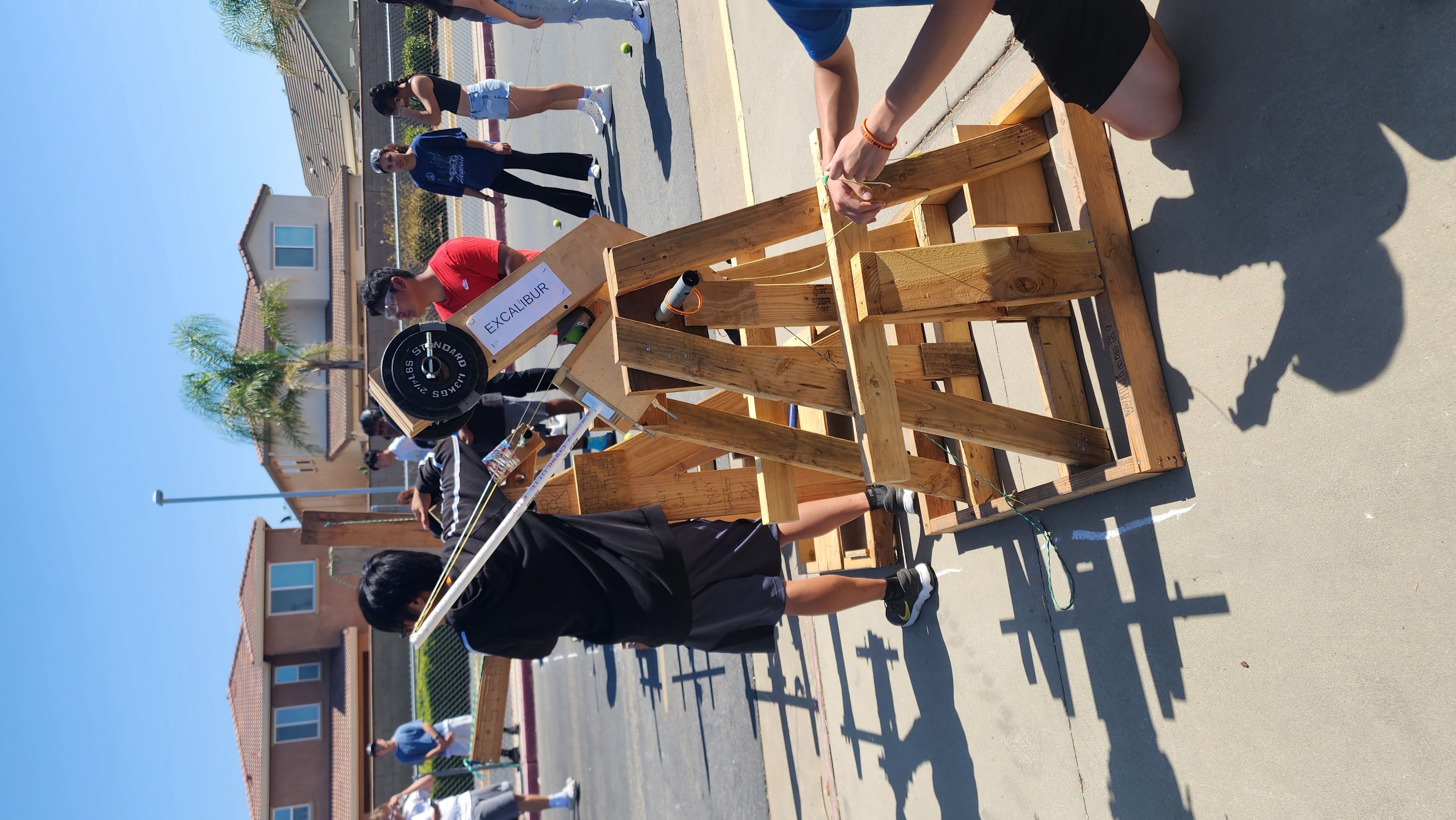
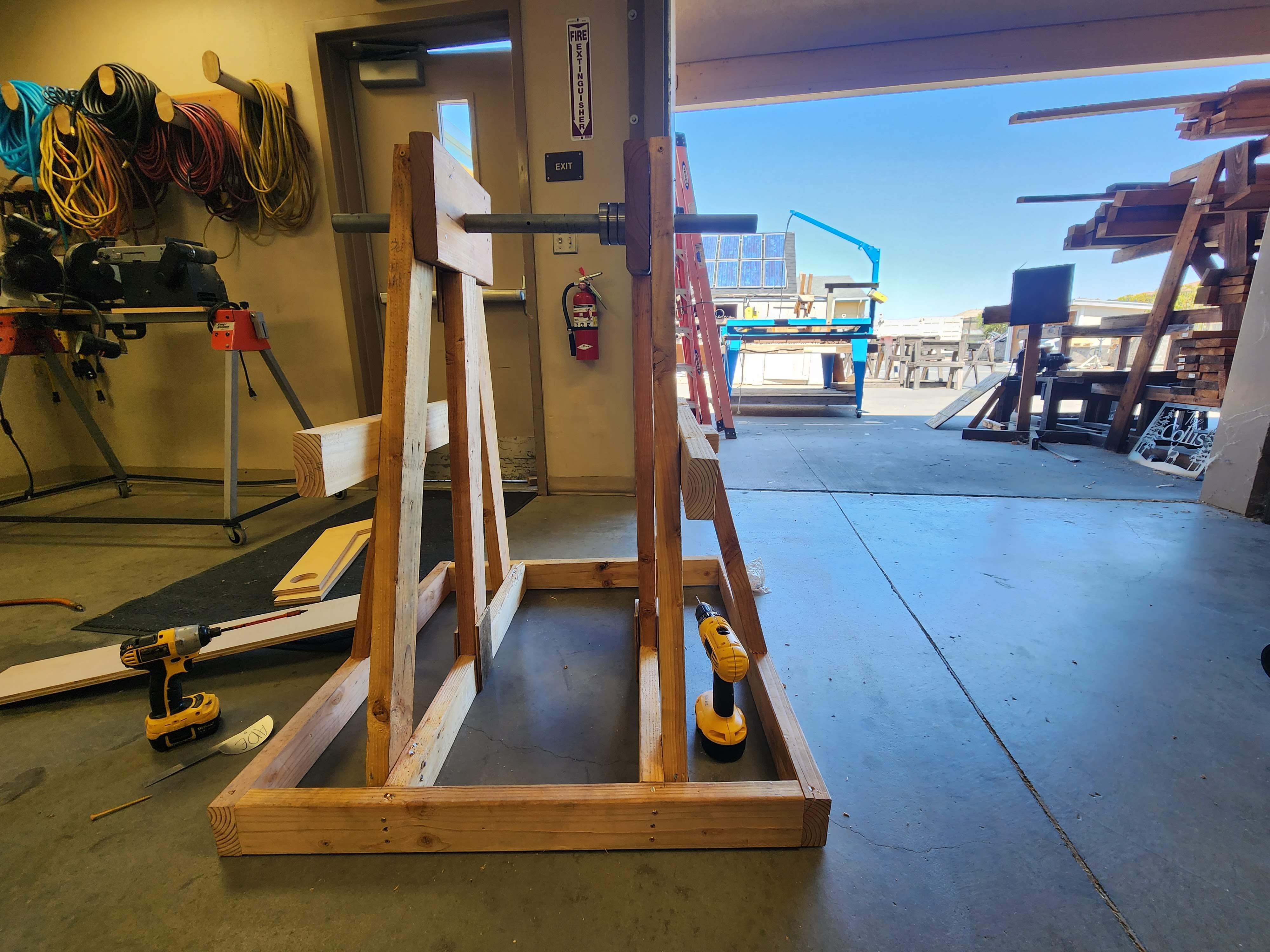
The build was constrained to a 4 foot by 4 foot footprint and standard shop materials, primarily wood. We also had a strict 20 lb limit on added counterweight. To reduce friction losses at the pivot, we integrated large industrial bearings to support near-frictionless arm rotation.
Structural Rigidity
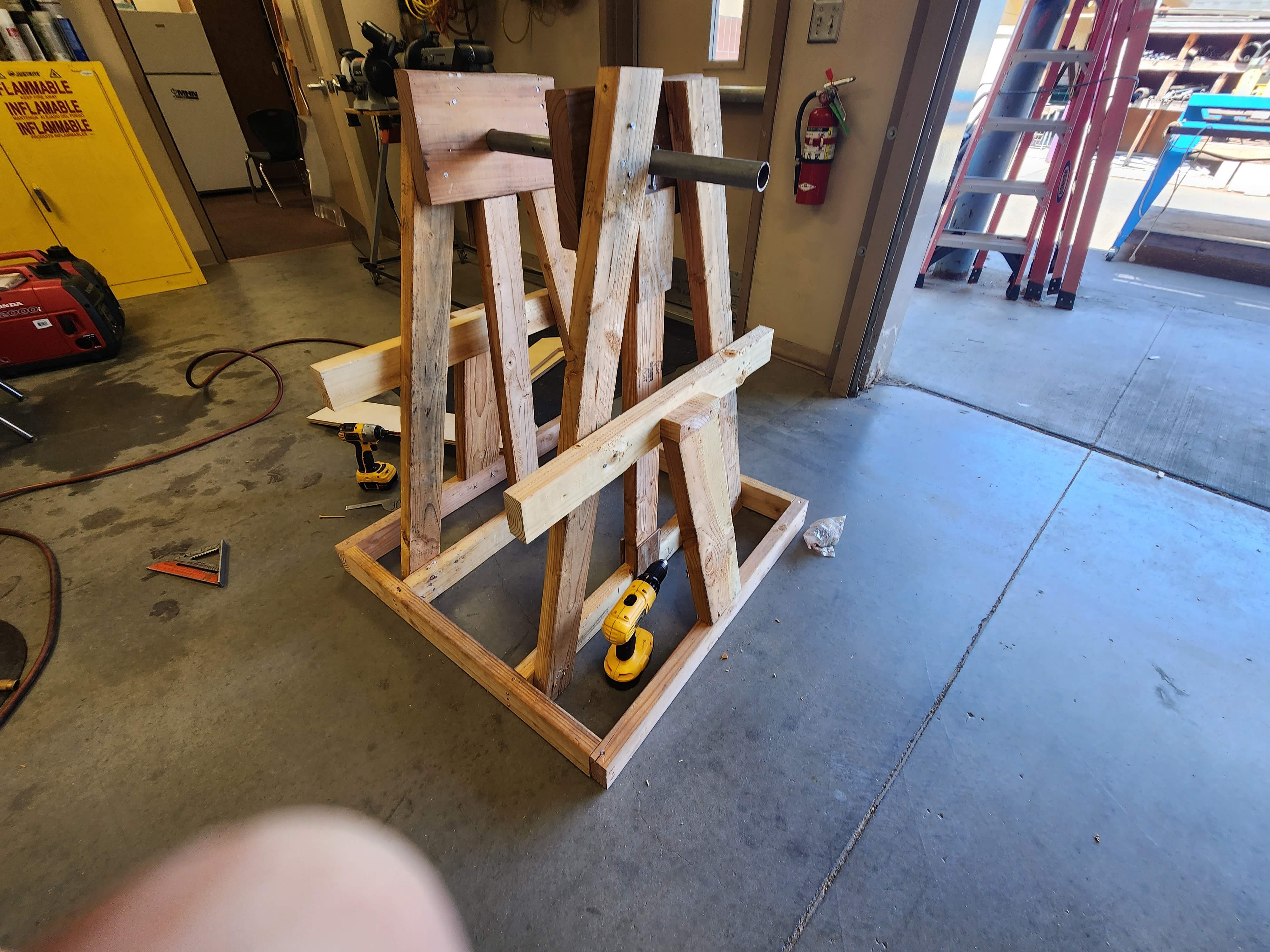
The first priority was eliminating frame rocking, since oscillation steals launch energy from the projectile. We designed and braced a rigid base to handle rapid momentum shifts, then validated it with stress tests to confirm the frame stayed stationary during firing loads.
Arm Design Innovation
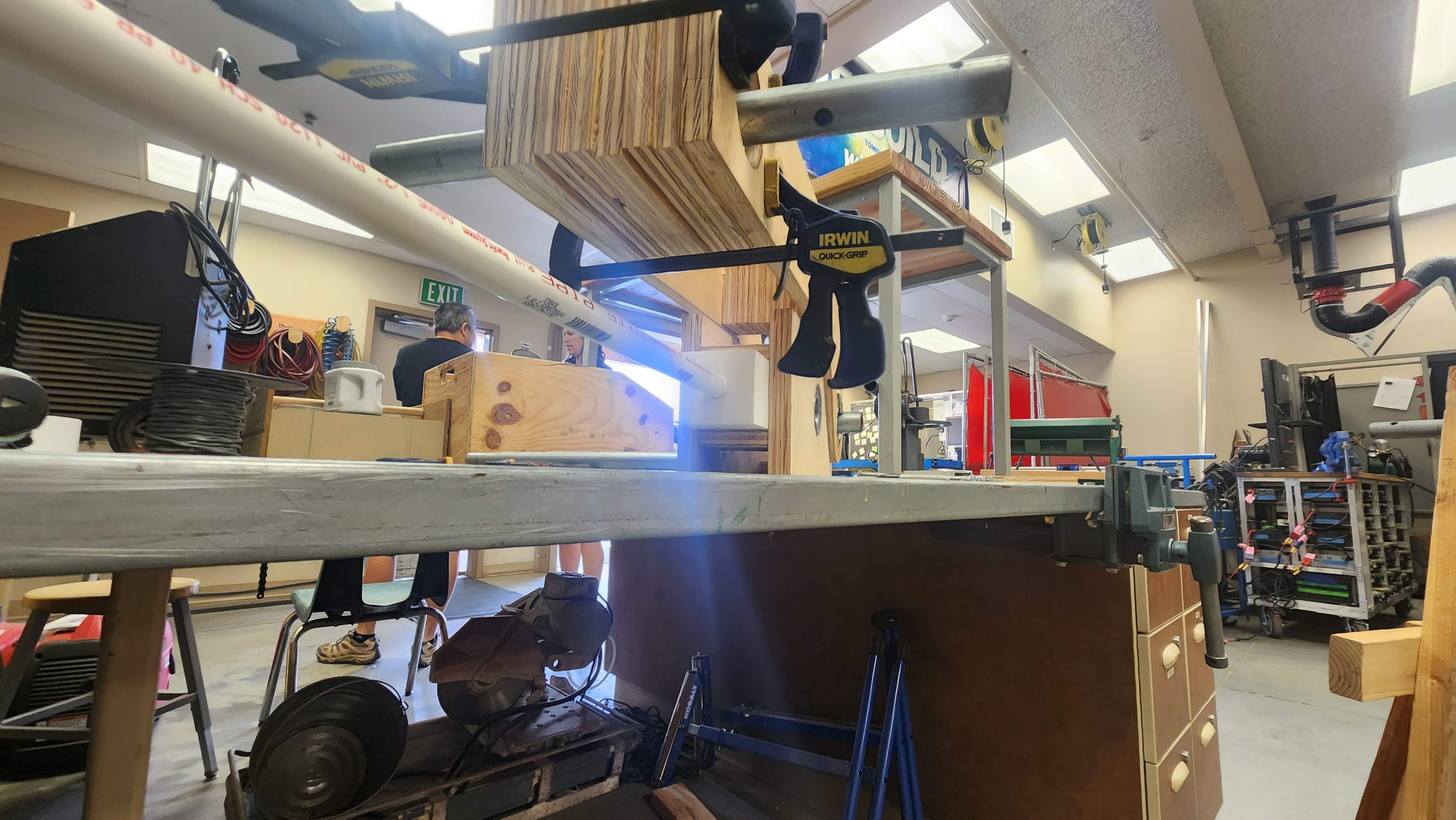
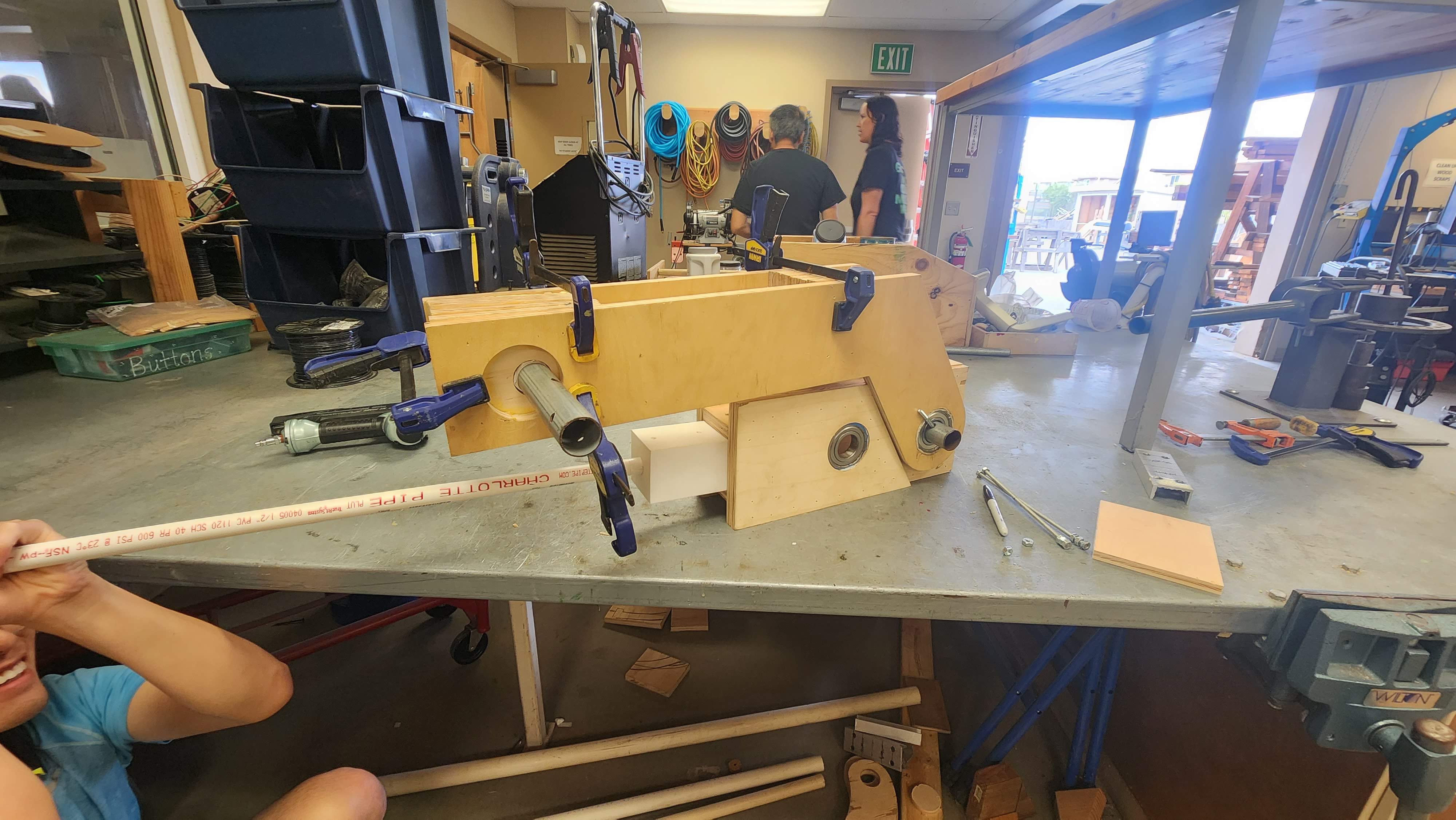
Instead of a conventional heavy wooden arm, I pursued a lighter, faster alternative inspired by historical whipping-style trebuchets. We used a custom PVC arm and I designed a 3D-printed pivot housing, reducing rotational inertia and increasing angular acceleration.
Counterweight Strategy
The largest performance gain came from mass distribution strategy. While external added weight was capped at 20 lb, we optimized internal arm mass by CNC-machining a custom wooden plate, hollowing key volumes, and packing high-density sand near the counterweight arm tip to increase effective moment.
Results and Conclusion
The combination of rigid structure, low-inertia arm design, and tuned mass distribution produced a record-setting outcome: our trebuchet achieved the school's all-time launch distance. The project was a strong lesson in physics-driven design and in using modern tools like CNC machining and 3D printing to iterate on classical mechanical systems.
More Photos