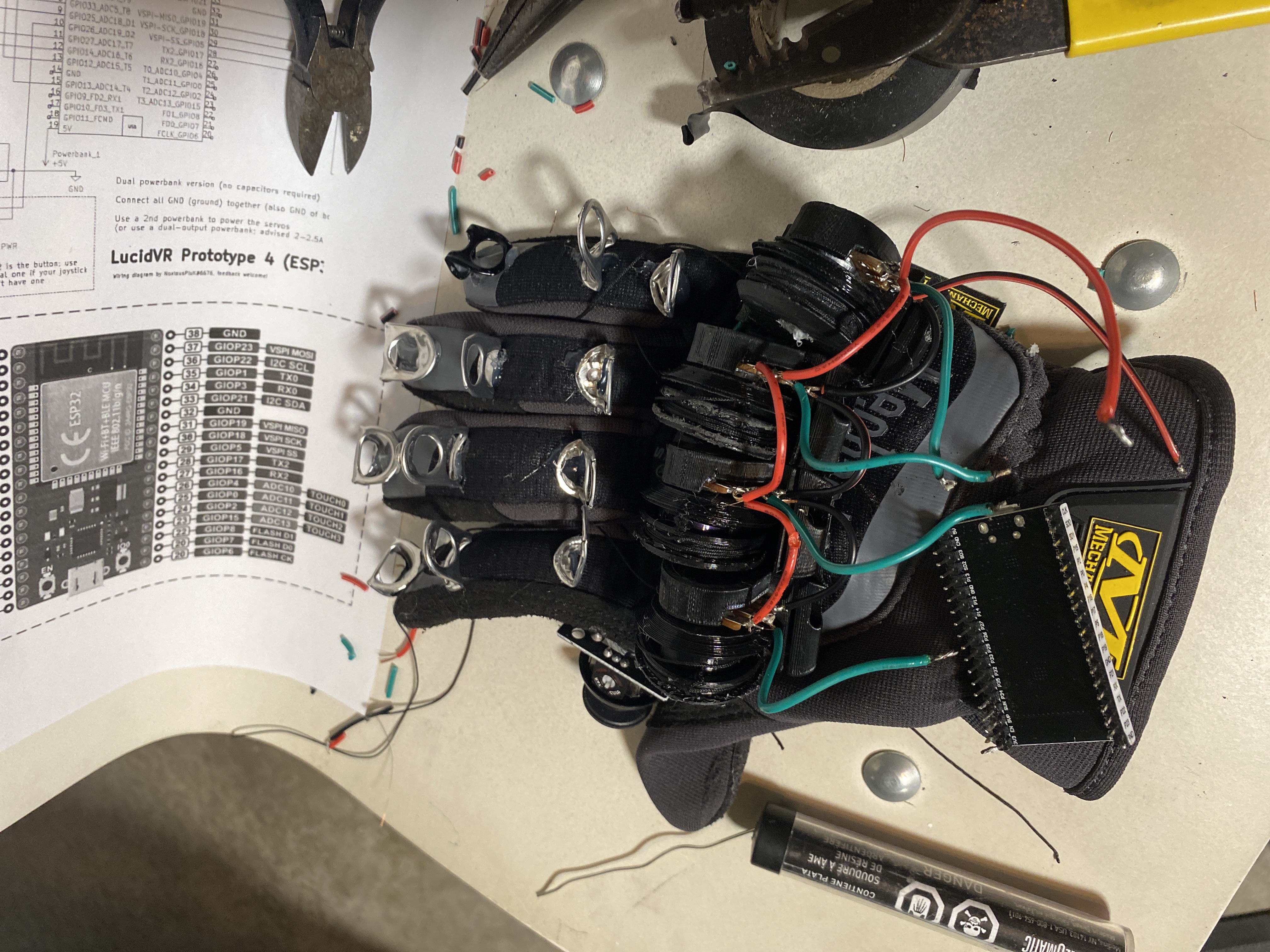
One of my very first personal engineering projects was building a VR hand-tracking glove, and it is what originally inspired me to pursue engineering. During COVID, when I had plenty of free time, I started teaching myself circuits and Arduino, then decided to give this project a shot as my first real hands-on build.
Project Photo
Problem / Goal
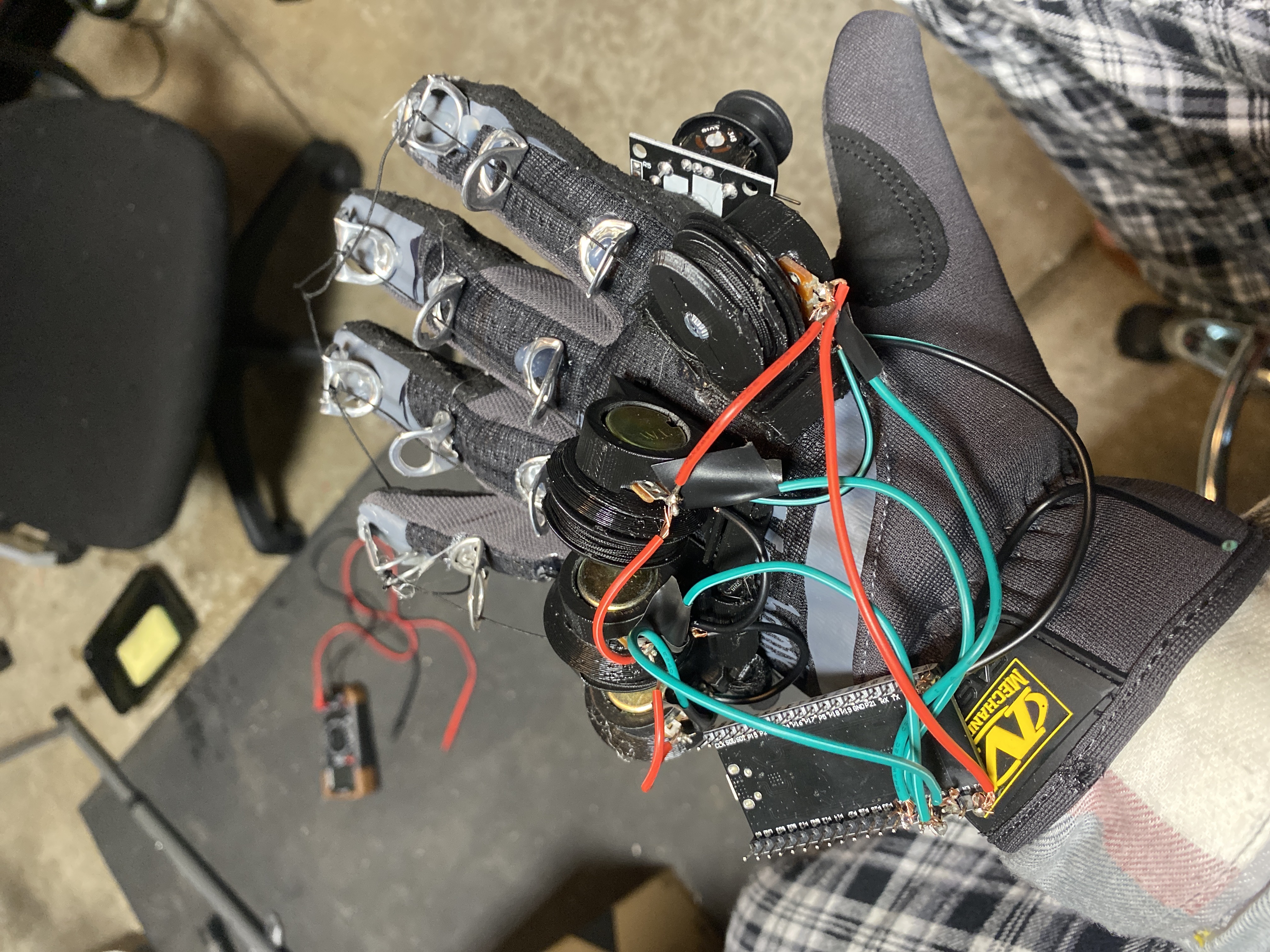
The goal was to build a glove that could track finger movement for VR interaction. I wanted to learn the full stack of a physical prototype: mechanical design, electronics, firmware, and the final software handoff to a computer.
Build Process
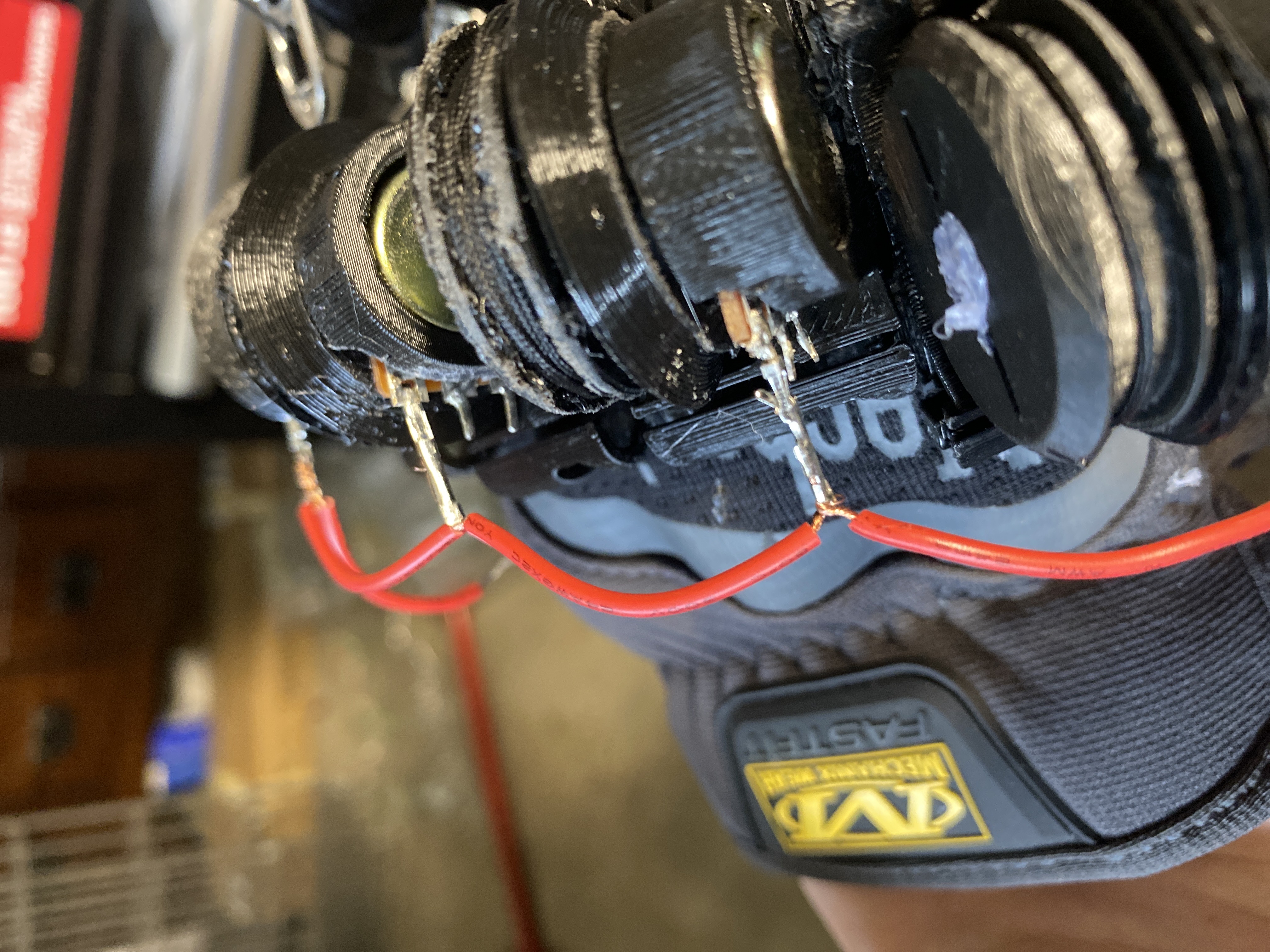
I 3D printed parts on a friend's Ender 3 and improvised a few fixes, including soda can tabs as string holders. Finger motion was measured using string spools tied to potentiometers, then read locally on an ESP32 and sent to a computer over cable.
First-Time Skills
This was my first time soldering and crimping. I ended up using my dad's old woodburning kit for joints, so the solder and hot glue were not pretty, but it taught me how to keep iterating even when the first version is messy.
Results
While I could not fully get the VR software side working at the time, the project gave me invaluable experience in design, prototyping, and problem-solving. More importantly, it shaped how I think about building: learn fast, test often, and keep moving.
Lessons + Next Steps
Now in college, I want to revisit this project and redesign it with the skills I have gained since then. Even if the outcome is not perfect, experimenting with unique designs is still one of the most exciting parts of engineering.
If you are interested in building your own version, check out the LucidGloves project.
More Photos