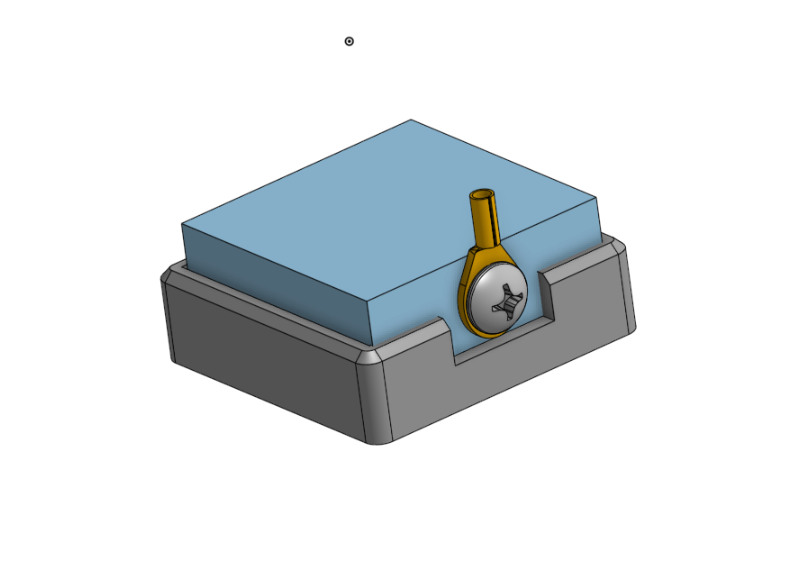
The primary objective of this project was to eliminate the manual zeroing process on our VELOX CNC machine. Instead of jogging Z by hand for every setup, I designed a touch-off sensor that automatically detects a known reference height and computes an accurate tool zero.
Project Photo
Project Overview
Before this upgrade, operators had to manually set Z-axis zero for every job. That routine took time and introduced variability from user to user. The goal was a reliable electrical touch probe that closes a circuit on contact and feeds a consistent trigger signal back into the controller.
Design and Fabrication
- CAD Design: I designed a custom 3D-printed stand in Onshape to act as both a fixed mounting point and electrical insulator.
- Aluminum Machining: A 2 inch aluminum block was milled square on all faces to provide a repeatable contact surface.
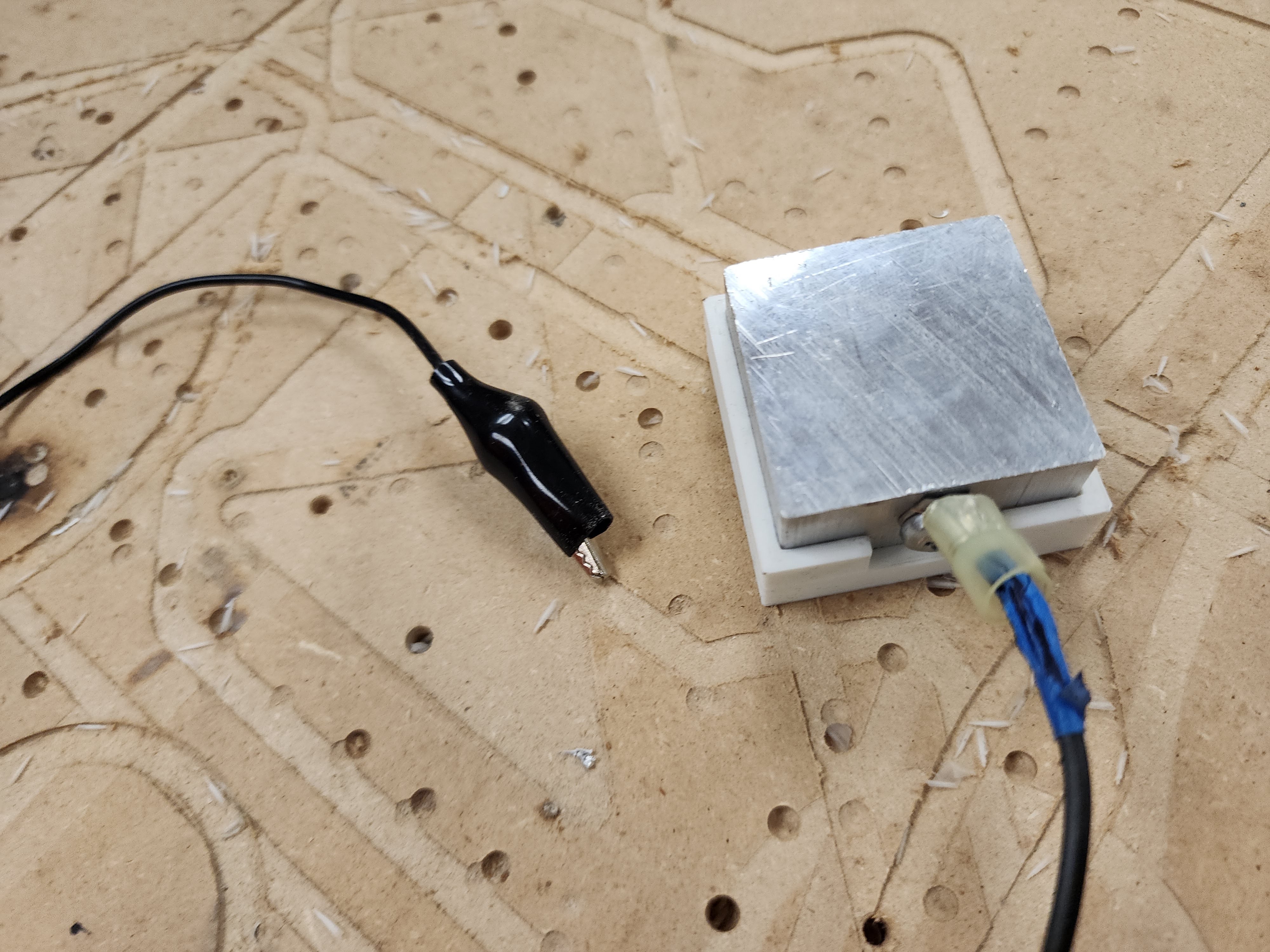
- Assembly: The block was drilled and tapped for a terminal screw, then press-fitted into the printed housing.
Electrical Integration
- Wiring Logic: The endmill is grounded through the spindle and frame; contact closes a normally open circuit.
- Signal Input: The positive lead was routed to the controller Z-pin input and secured to the block using an O-ring crimp terminal.
- Reliability: Blue Loctite was used on the terminal screw to resist vibration during aggressive machining.
Software and Implementation
I wrote a custom Mach3 macro for the probing sequence. On command, the Z-axis moves down at a controlled feed rate until tool contact closes the circuit and triggers a Z-trip event. The macro records the machine coordinate at impact and subtracts the known sensor block height to calculate the final workpiece-referenced zero.
Results and Impact
- Reduced setup time: Operators no longer manually jog Z for each setup.
- Higher consistency: Automated probing removes most human variability from height zeroing.
- Better throughput: With probing routine included at program start, the team can produce parts faster and focus effort on higher-value manufacturing work.
More Photos