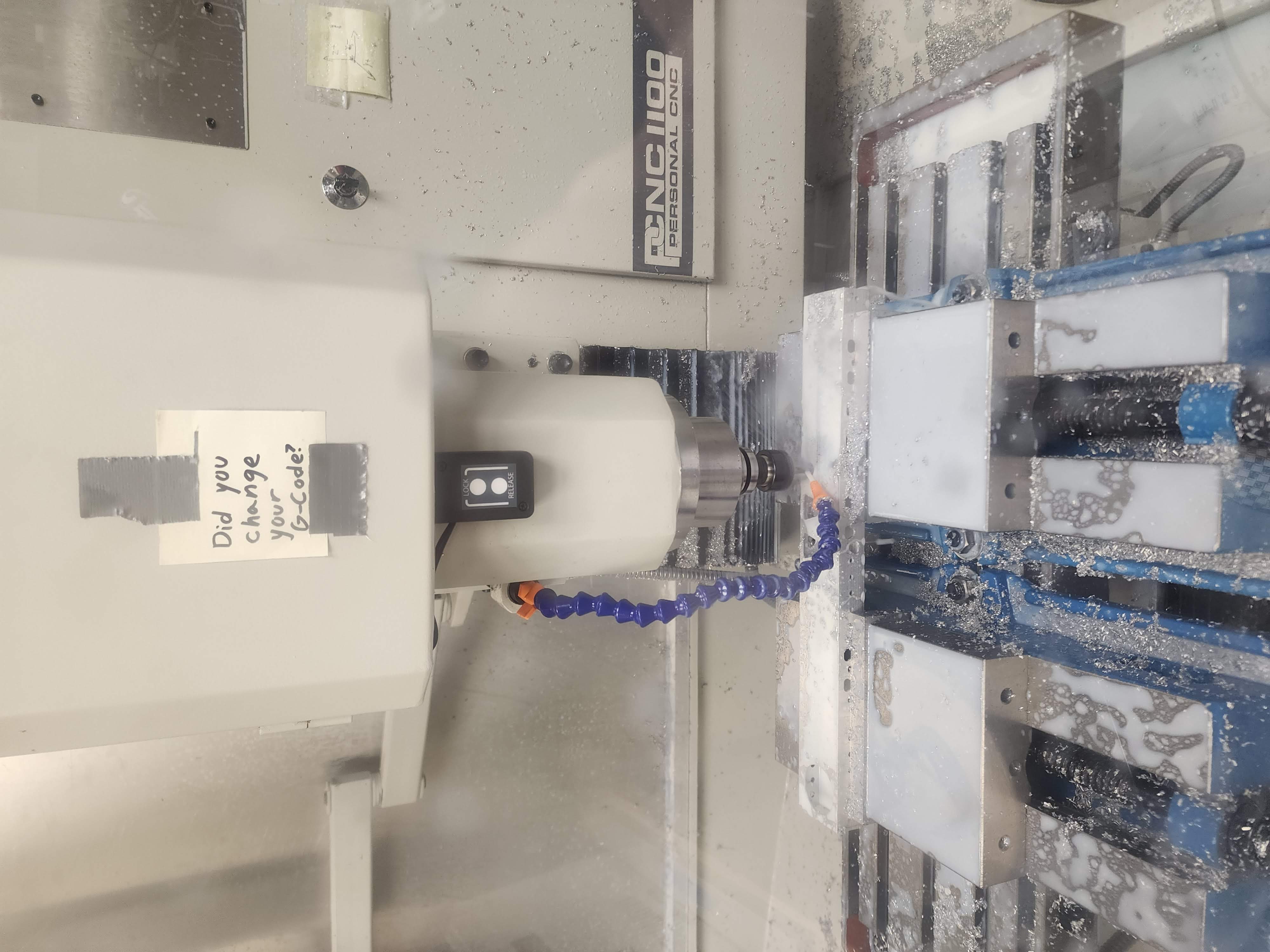
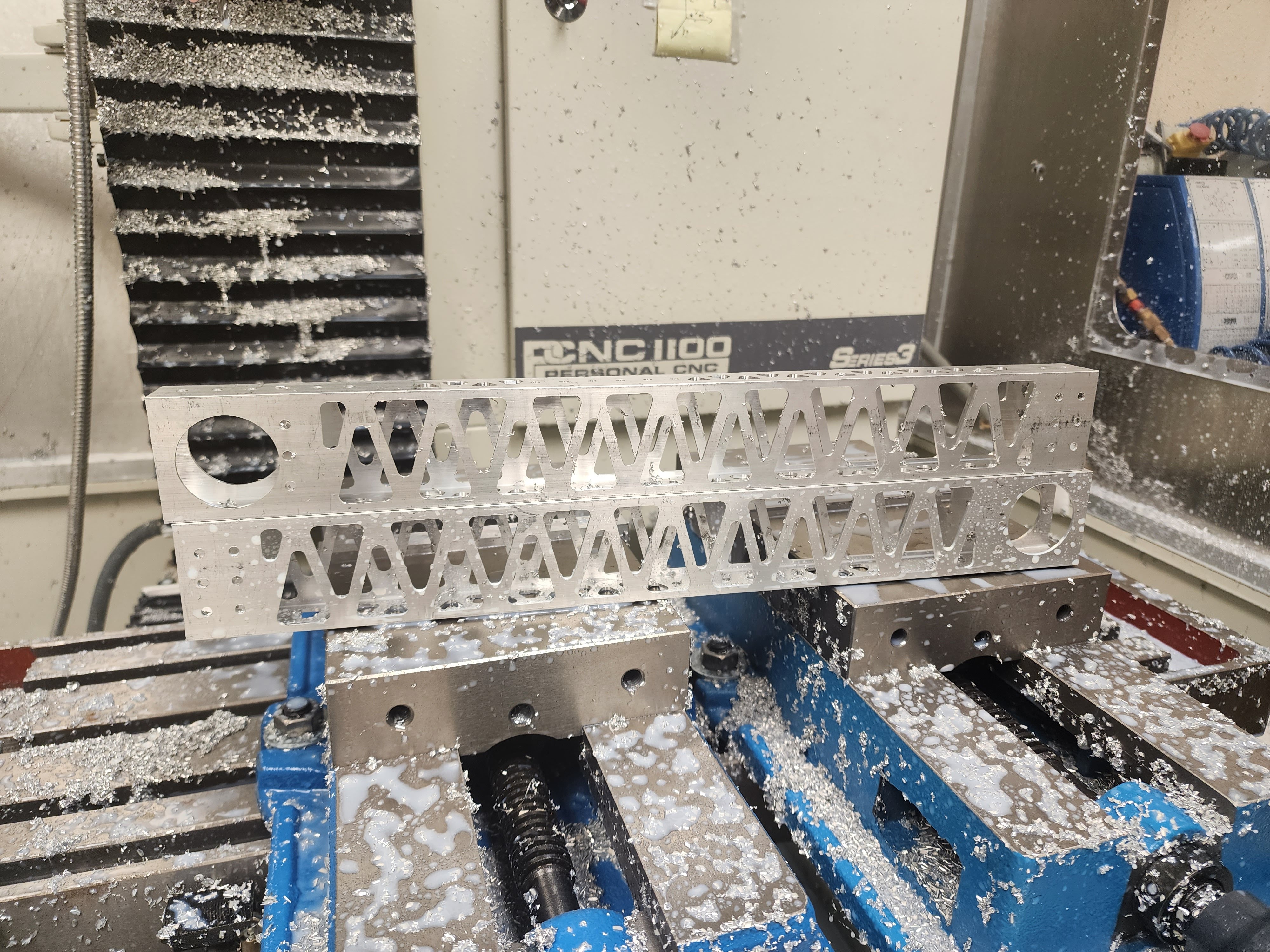
If the VR glove was my introduction to building, my experience with the Tormach PCNC 1100 was my crash course in making tools work when nobody else could. What started as a marketplace mystery ended up becoming the backbone of our fabrication process.
Project Photo
Starting Point
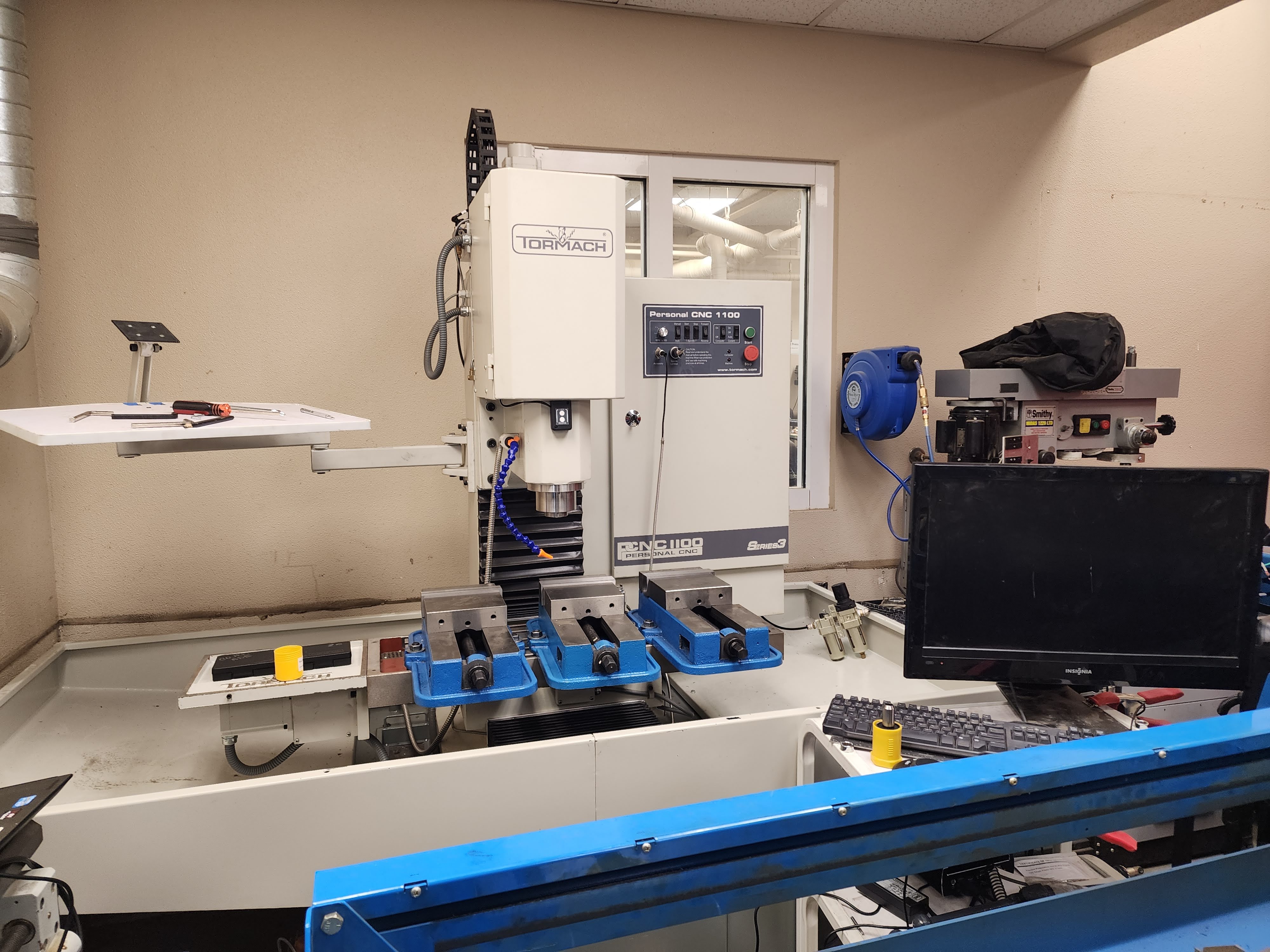
When my mentor first introduced me to the Tormach, it was essentially a paperweight. It had been bought on Facebook Marketplace, never properly unboxed or set up, packed with random parts, and not even fully wired. Before this, my machining knowledge was limited to basic G-code and how to zero a machine.
Restoration Work
I spent weeks with the manual open, learning the machine from the inside out. I taught myself PathPilot workflow, passive probe zeroing, and how to tune feeds and speeds so we could cut metal efficiently instead of guessing.
Custom Enclosure Build
Since a factory enclosure was out of budget, we built our own using aluminum plates and 1x1 extrusions. For the doors, I 3D printed linear bearing blocks, pressed in bushings, and mounted polycarbonate panels. It was scrappy, but it worked.
Why This Mattered
Before this, our team mostly relied on a Velox CNC table that struggled to hit the precision we needed. Getting the Tormach online changed our capability overnight and opened new design options for robot parts we could not reliably make before.
Results + Reflection
Bringing this machine back to life was a grind, but it transformed the team and solidified my role in Wolfpack Robotics. It taught me that if you are willing to dig through manuals and get your hands dirty, you can turn forgotten hardware into the most valuable tool in the shop.
More Photos