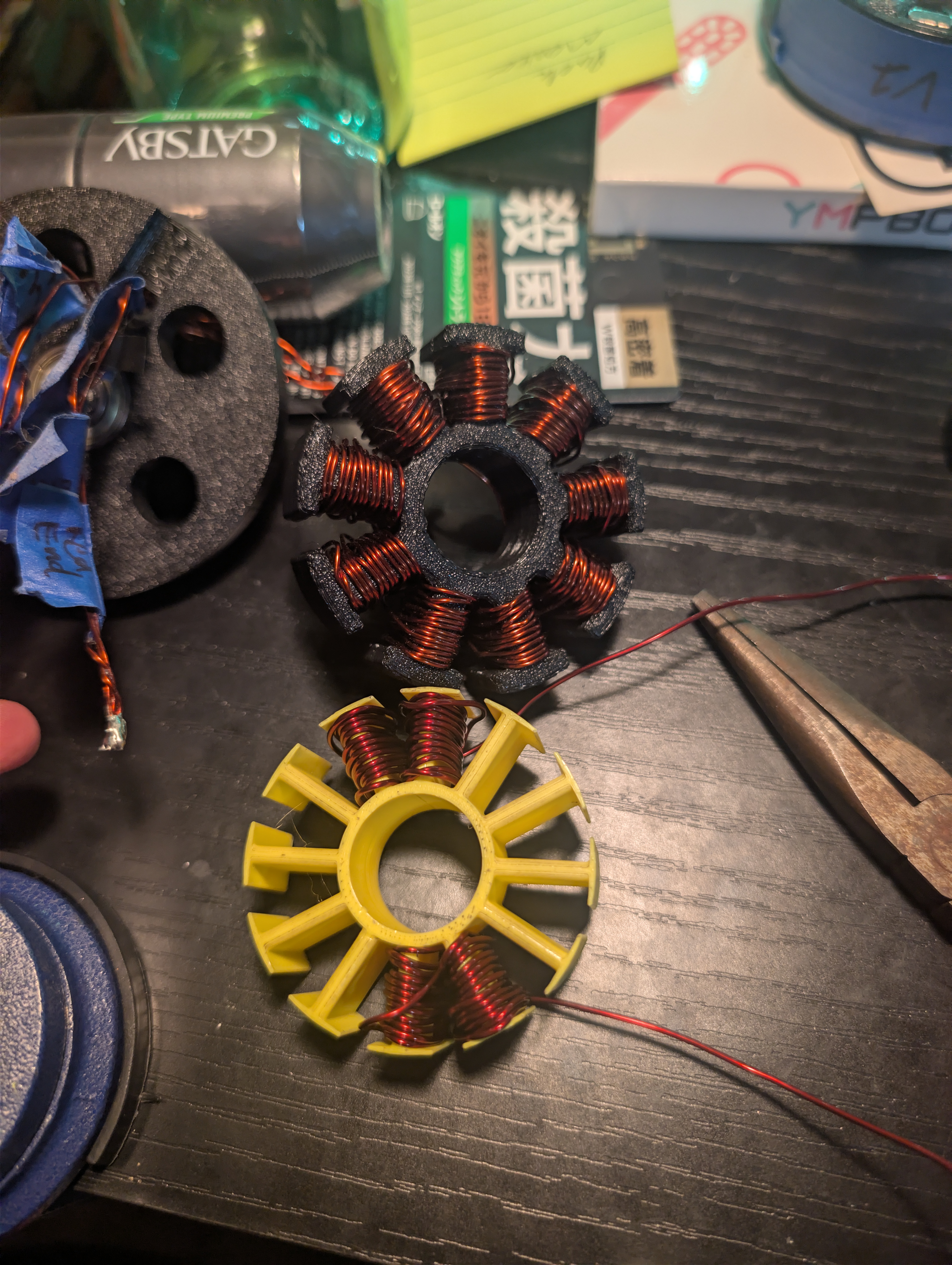
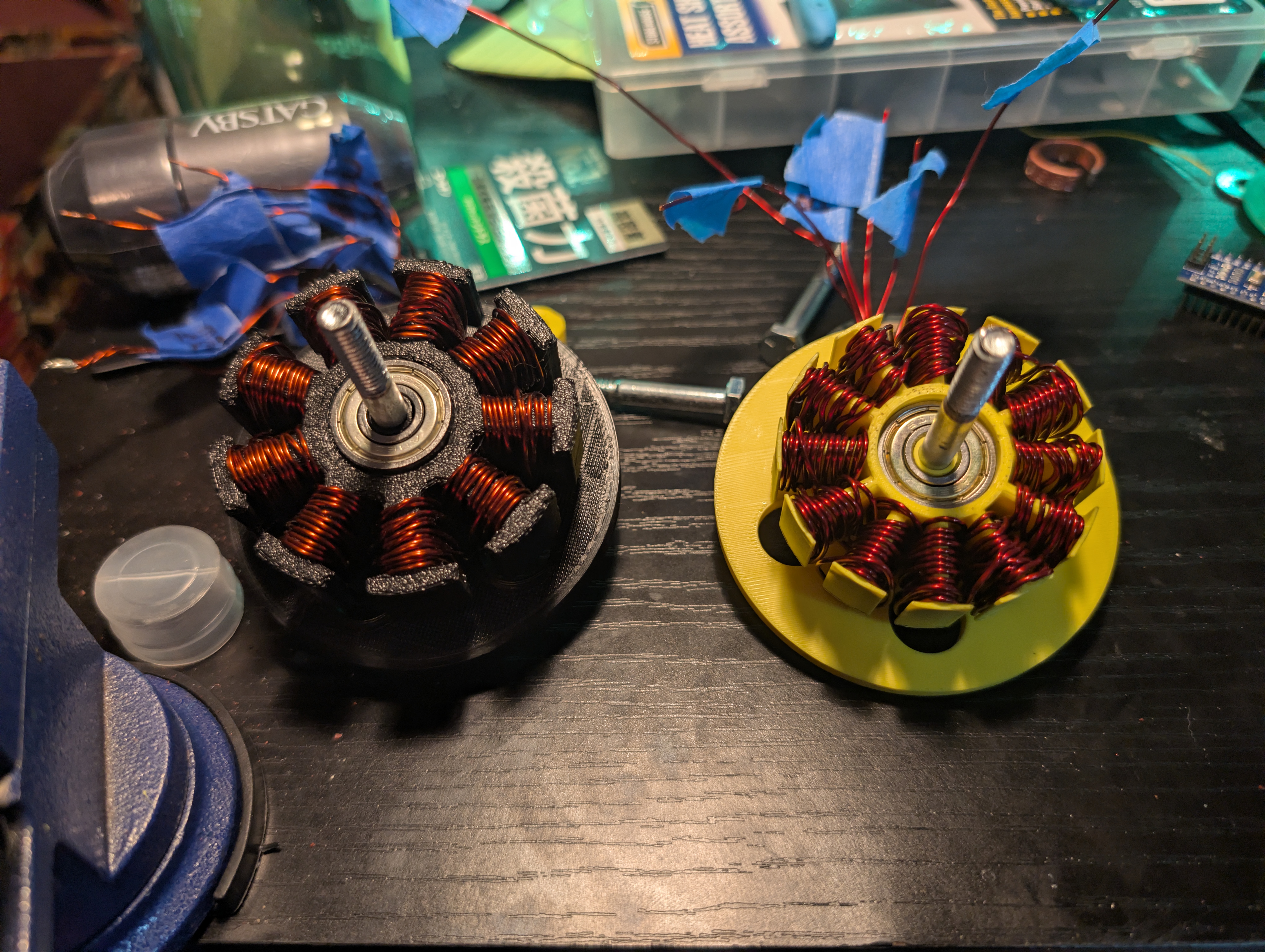
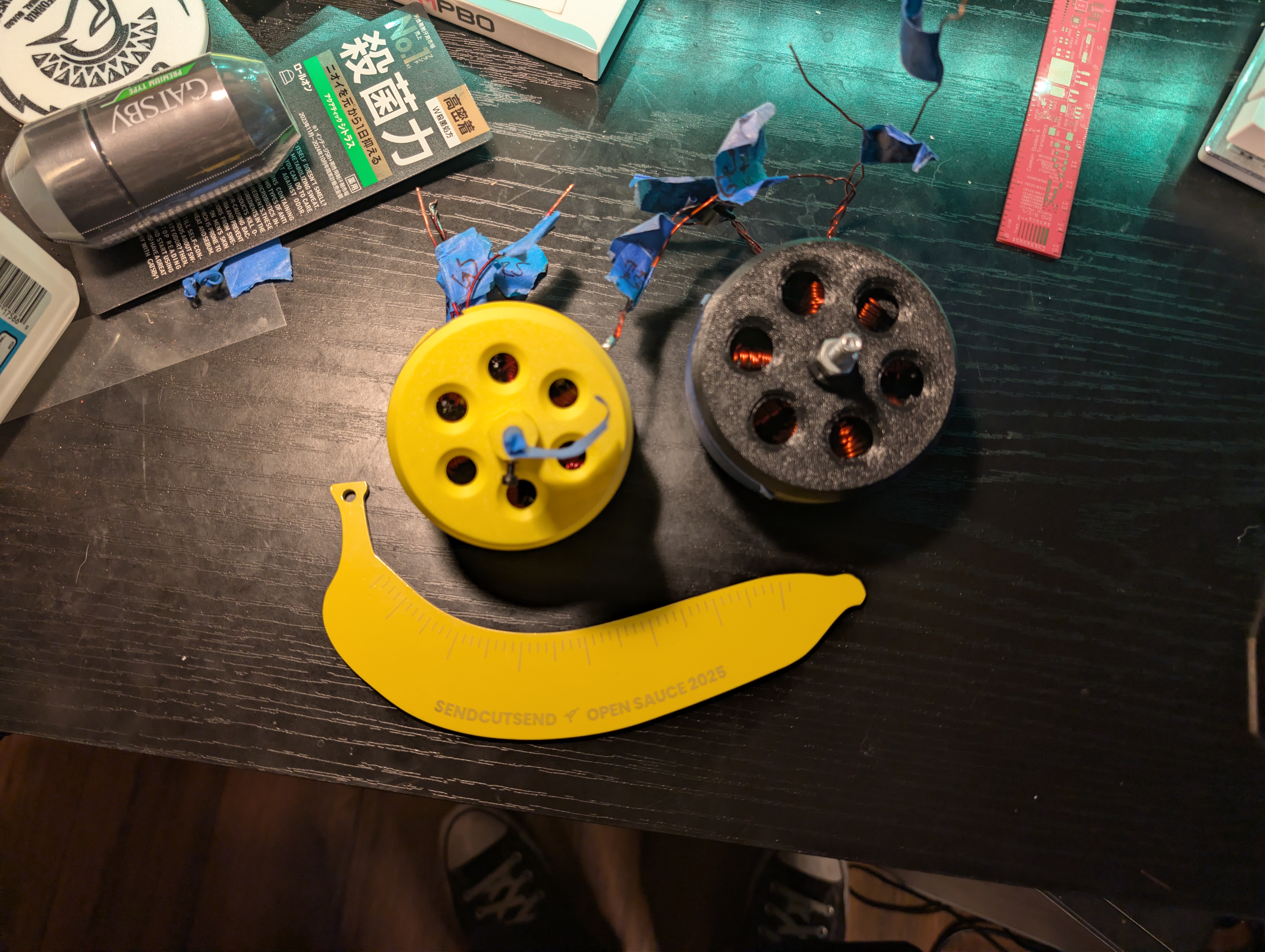
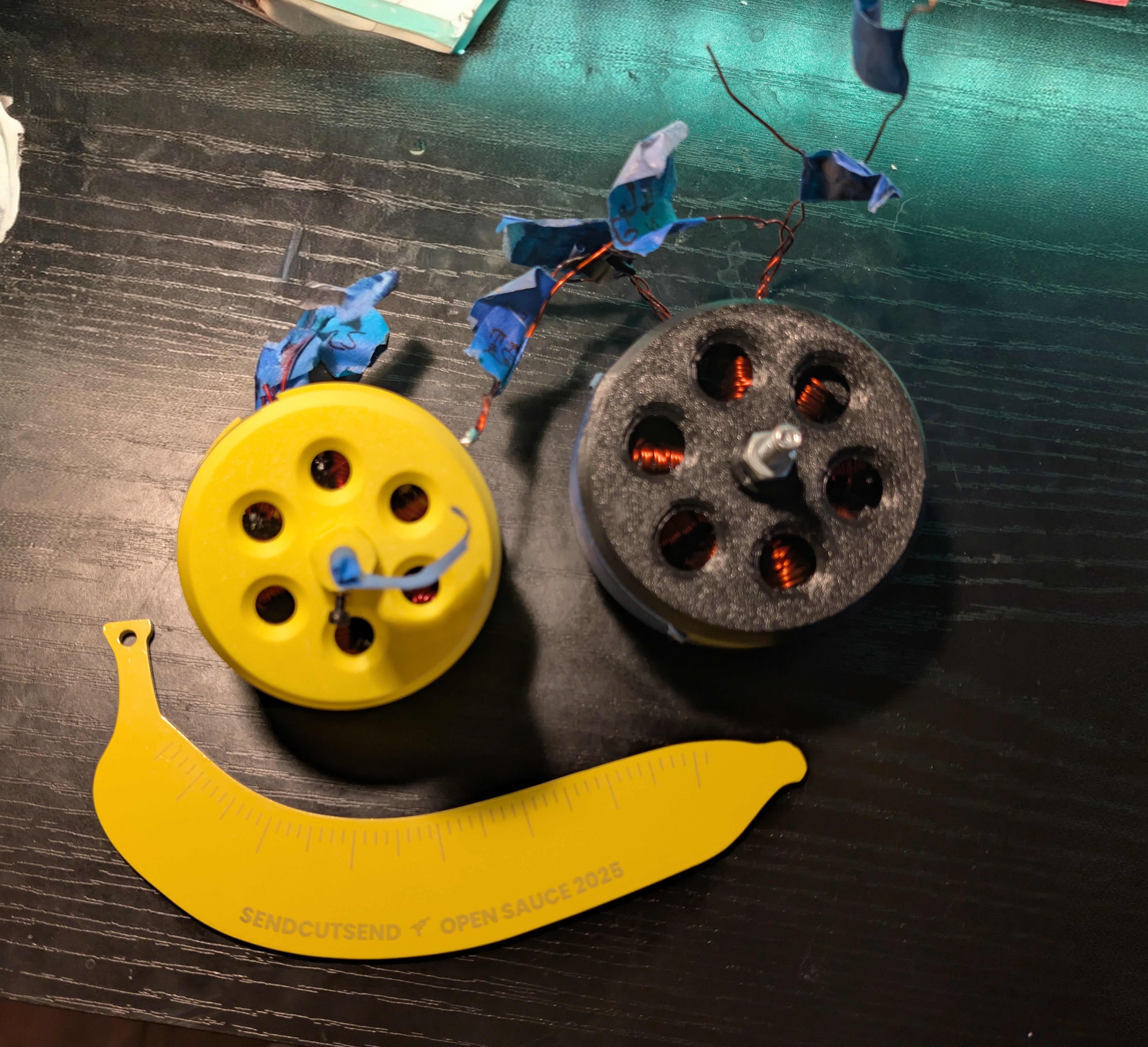
This project was developed to compare brushed and brushless motor behavior through hands-on prototyping. The main objective was to design and fabricate a functional 3D-printed BLDC platform and quantify performance gains through iterative electromagnetic and mechanical refinement.
Project Photo
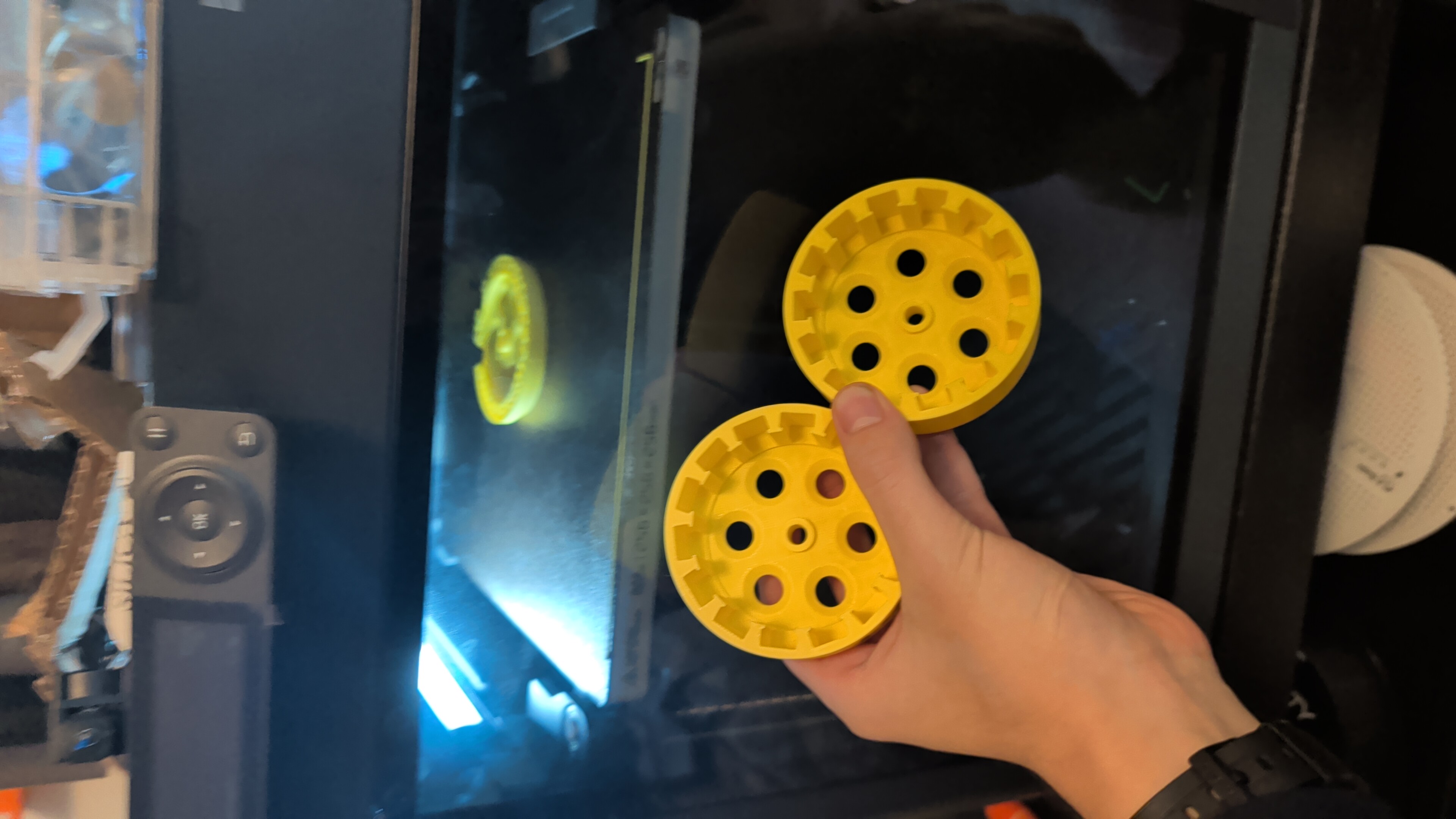
Generation 1: Proof of Concept
- Winding configuration: 9N12P CD-ROM style winding using 24 gauge copper wire.
- Mechanical limitations: Loose tolerances, rotor clearance mismatch, and high bearing friction from standard skateboard bearings.
- Performance: Approximately 100 RPM at 12V, validating the concept but exposing major loss mechanisms.
Generation 2: Electromagnetic Optimization
- Shifted to a 12N14P dLRK winding pattern to improve flux distribution.
- Reduced rotor diameter from 88 mm to 77 mm to tighten air gap and raise flux density.
- Improved mechanical alignment with a shaft-collar approach to reduce axial play and friction.
Technical Skills Applied
- CAD and rapid iteration in Onshape.
- FDM 3D printing and tolerance-aware design.
- BLDC theory, winding topology selection, and PWM control fundamentals.
Results and Impact
The second-generation build reached roughly 1000 RPM at 12V, a 10x improvement over Gen 1. The project demonstrated how tightly additive manufacturing tolerances and air-gap precision affect BLDC performance, and how iterative design can close the gap between concept and usable electromechanical hardware.
More Photos