Building a go-kart from scratch in engineering class was the ultimate crash course in how things move, or in my case, how they should not. It was one of those projects where every wrong turn taught me more than a smooth build ever could.
Project Photo
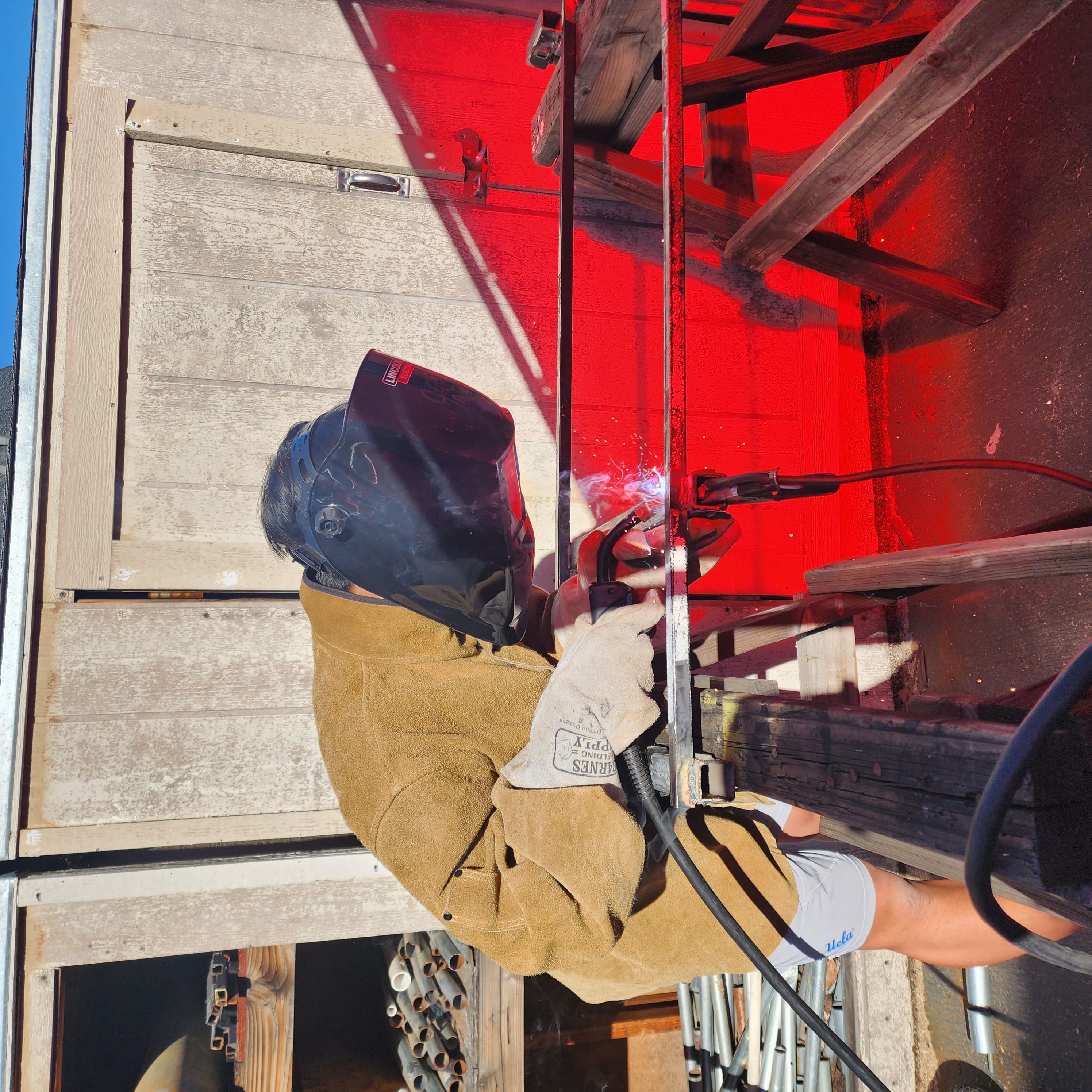
Starting from Scrap
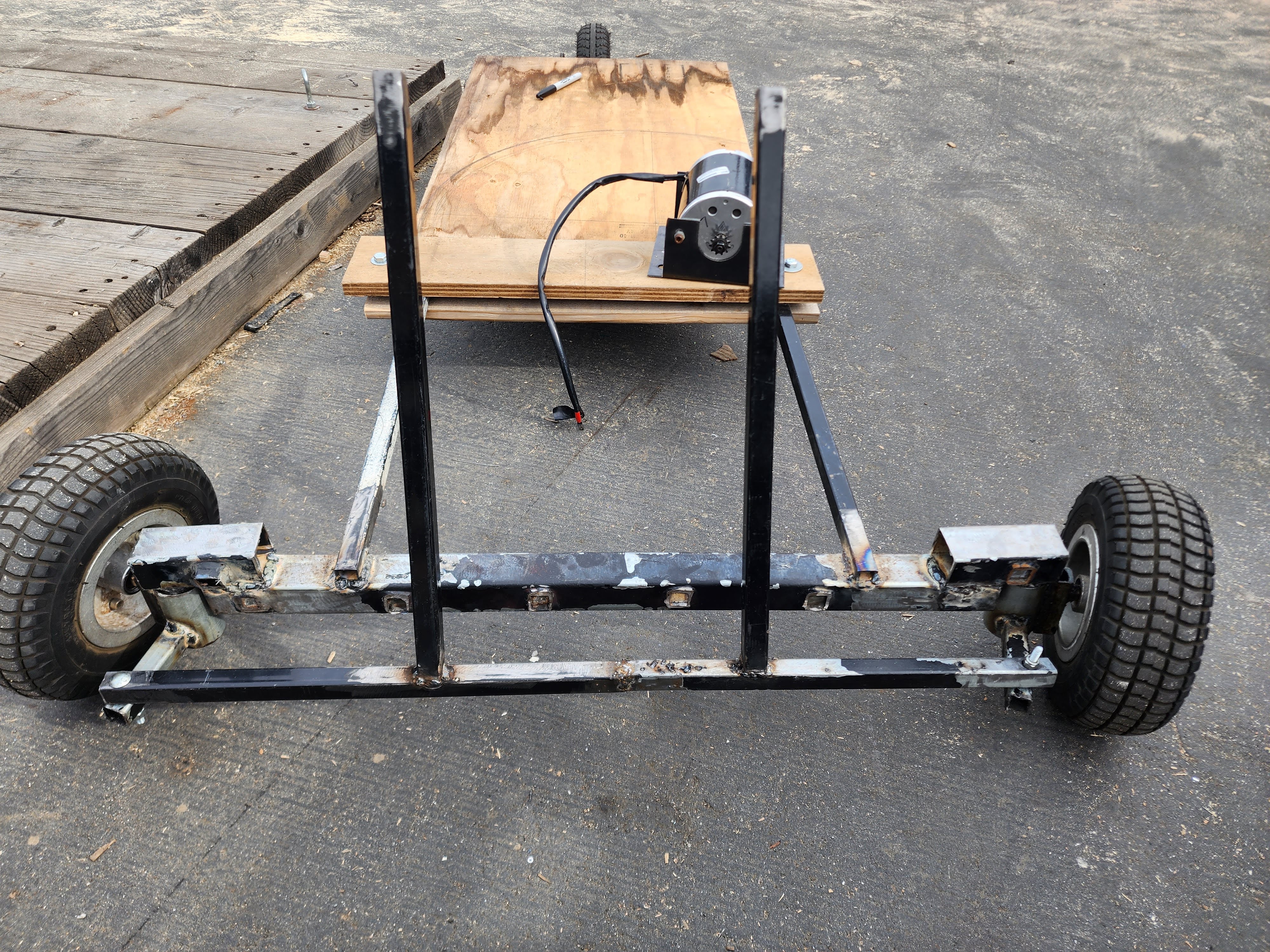
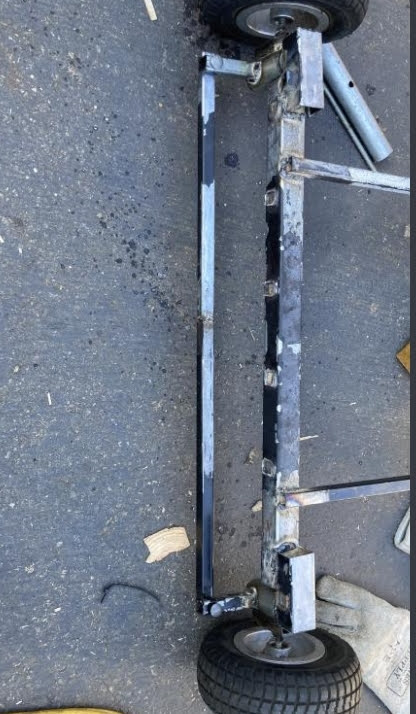
We started with scrap metal and a rough size target. First we outlined the footprint in chalk on the shop floor to visualize packaging, then moved into CAD to lock in the layout. After that, it was all hands-on: cleaning material, prepping joints, and MIG welding raw steel into a chassis.
Mechanical Lessons
I did not fully understand chassis flex or steering geometry yet. My steering solution was basically two sticks attached to the tie rod, so you steered by pushing and pulling directly. It was simple, but hard to control and not exactly confidence inspiring.
Electrical System
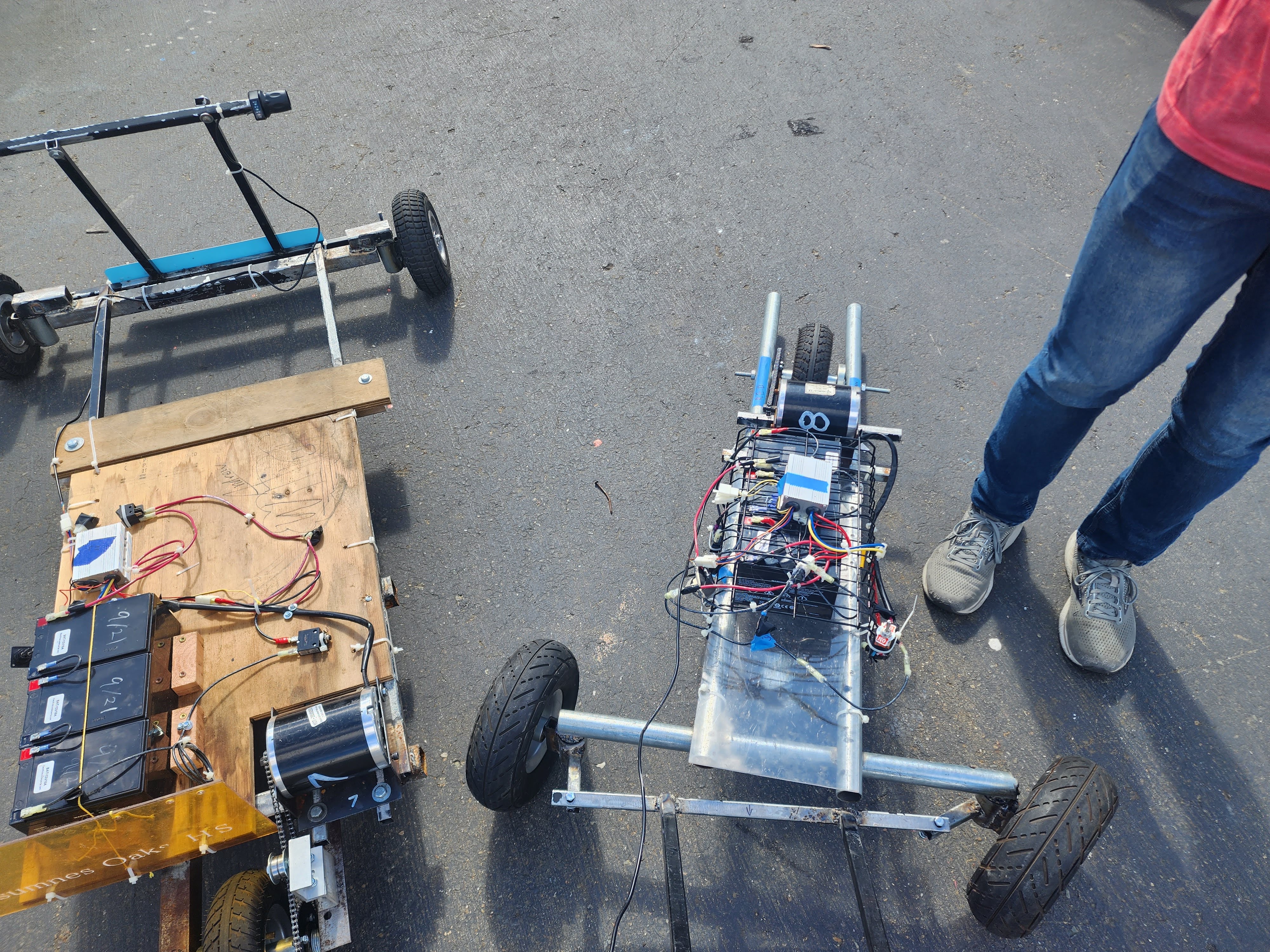
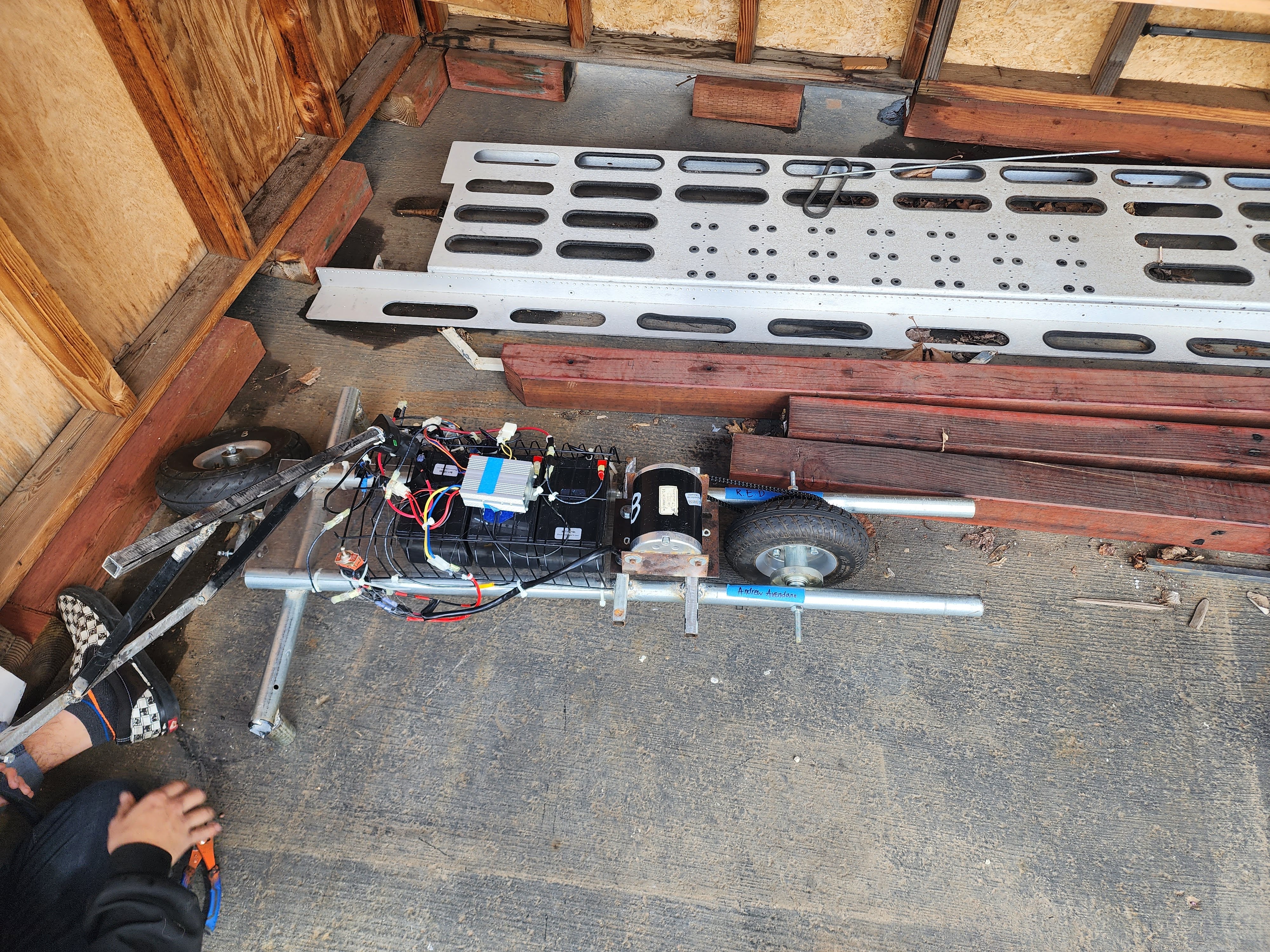
The powertrain used three 12V batteries in series feeding a controller and brushed DC motor. The topology was straightforward, but getting clean throttle behavior with the motor controller still turned into a meaningful integration challenge.
Second Build Experiment
With extra time, I built a second kart using thinner-wall high-stiffness tubing to reduce weight. I also added a three-way passthrough switch: middle cut power, one side routed through the controller, and the other bypassed it for direct battery-to-motor full power.
Results + Reflection
Was that bypass a good idea? Absolutely not. Between the rough steering setup and unrestricted power mode, the kart was a disaster waiting to happen. I spent plenty of time crashing it, but that made the lesson obvious: you can feel the difference between a well-thought-out system and one thrown together.
More Photos