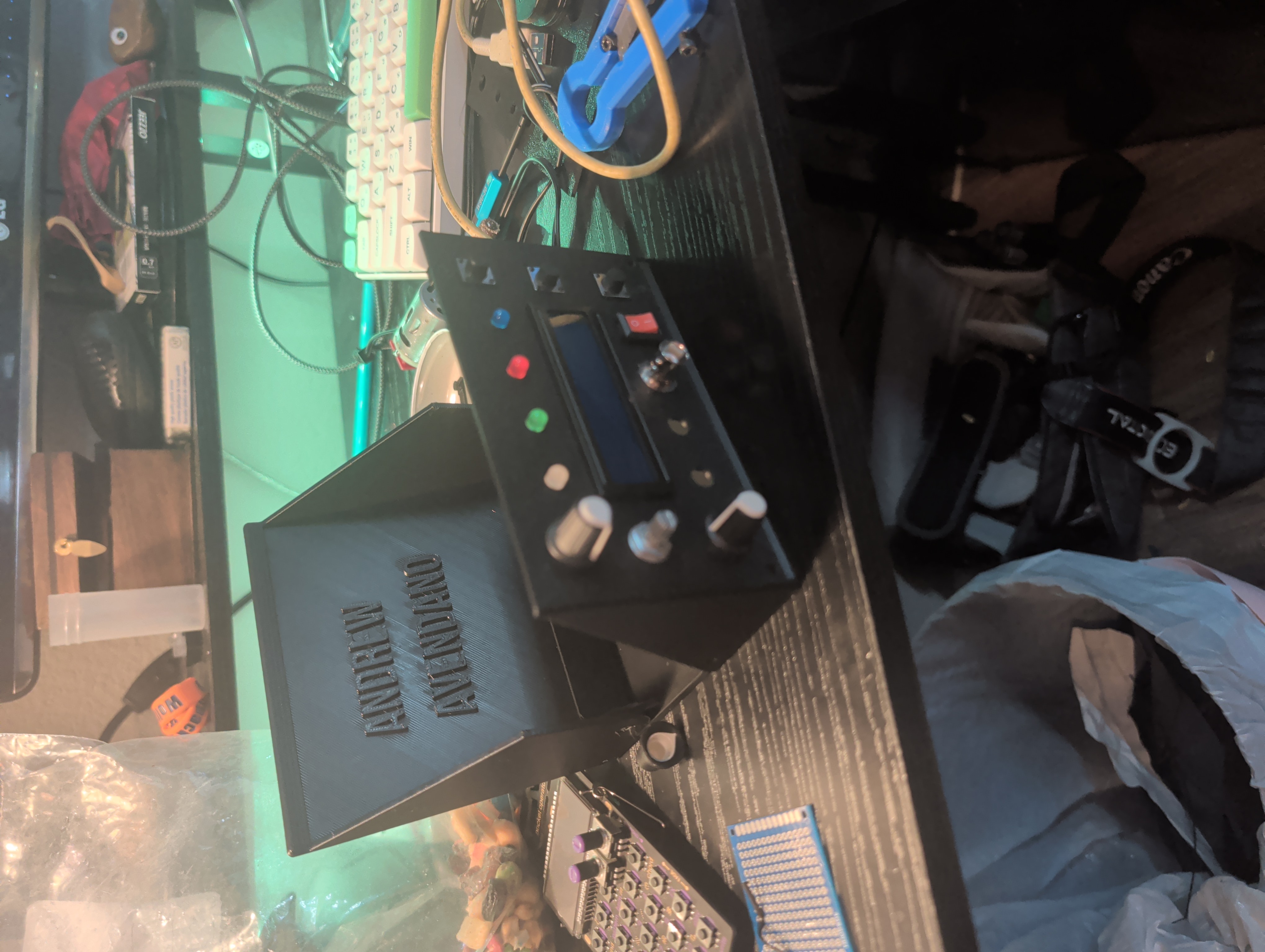
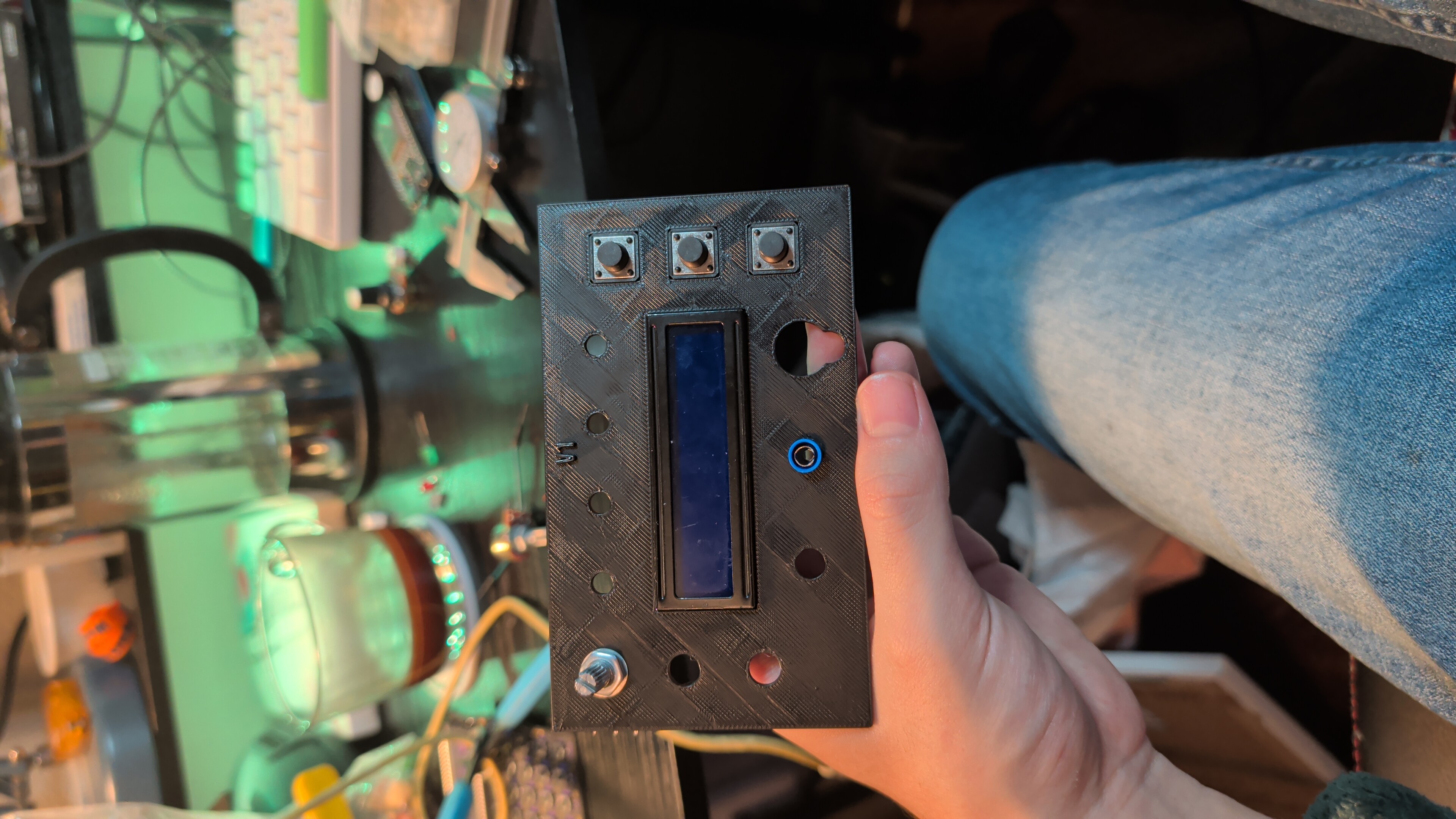
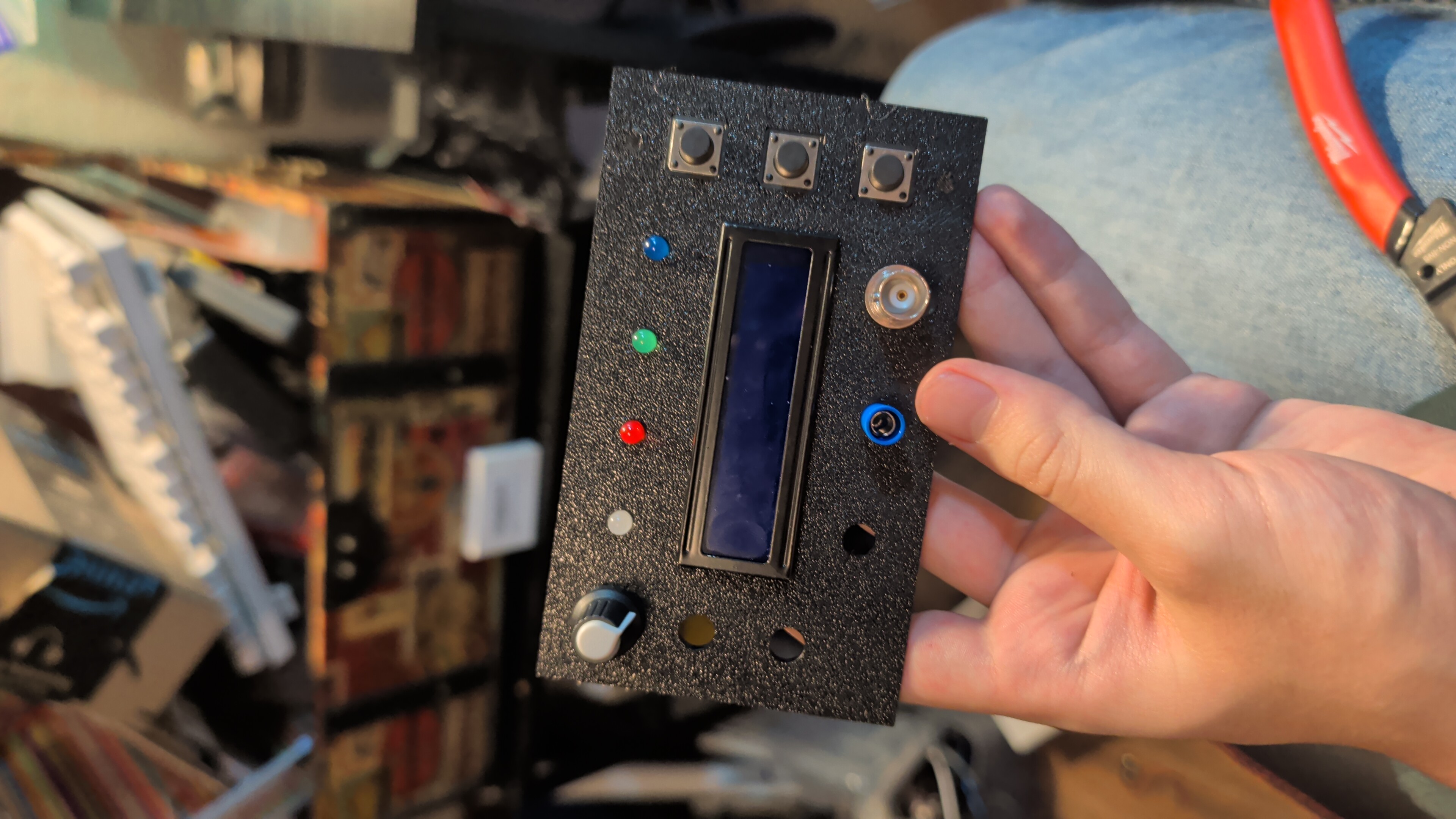
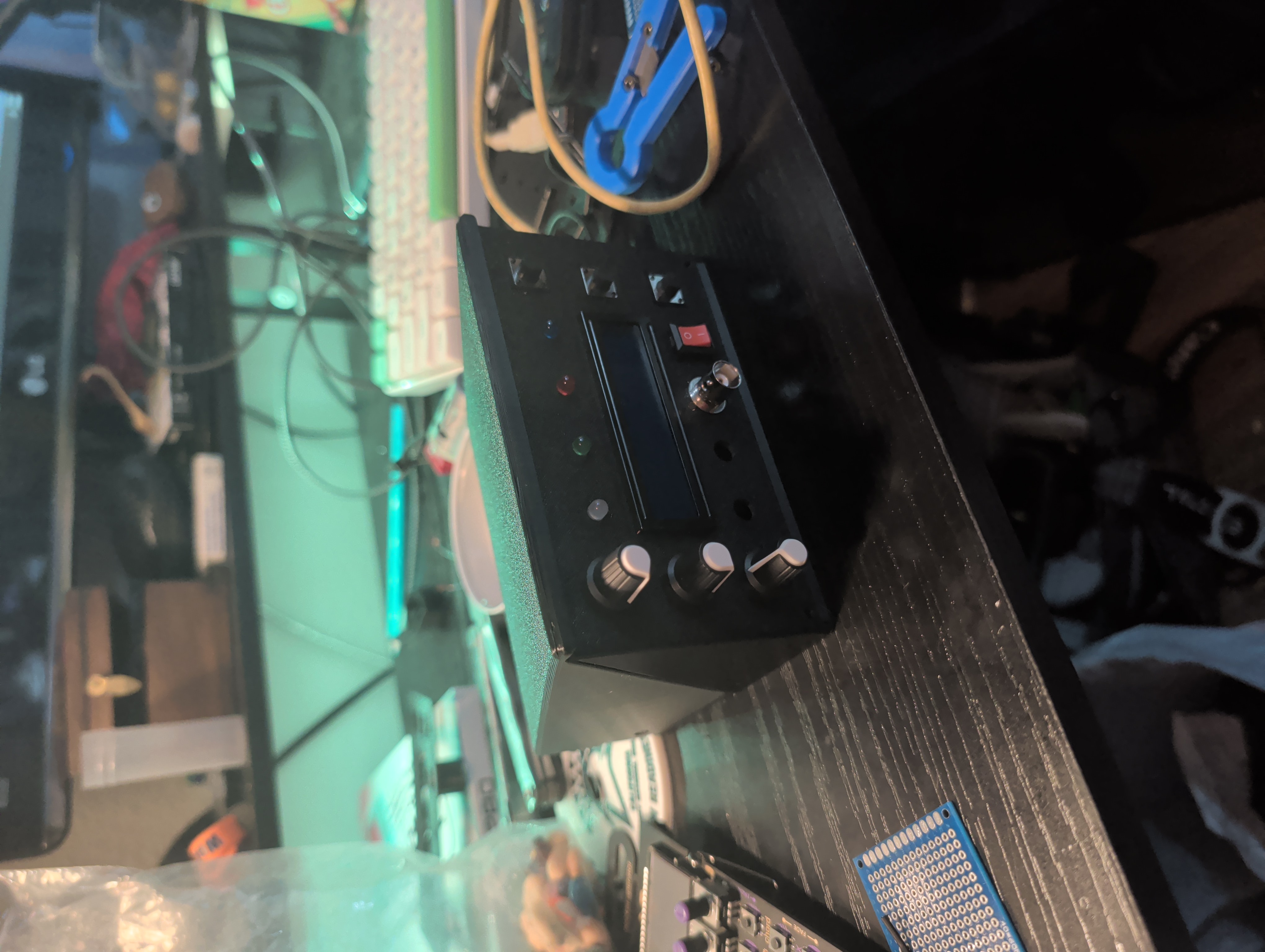
This project was a fully custom signal generator built around an ESP32 to explore waveform synthesis and enclosure design. Instead of relying on dedicated function generator ICs, I generated signals in firmware for lower cost and higher flexibility.
Project Photo
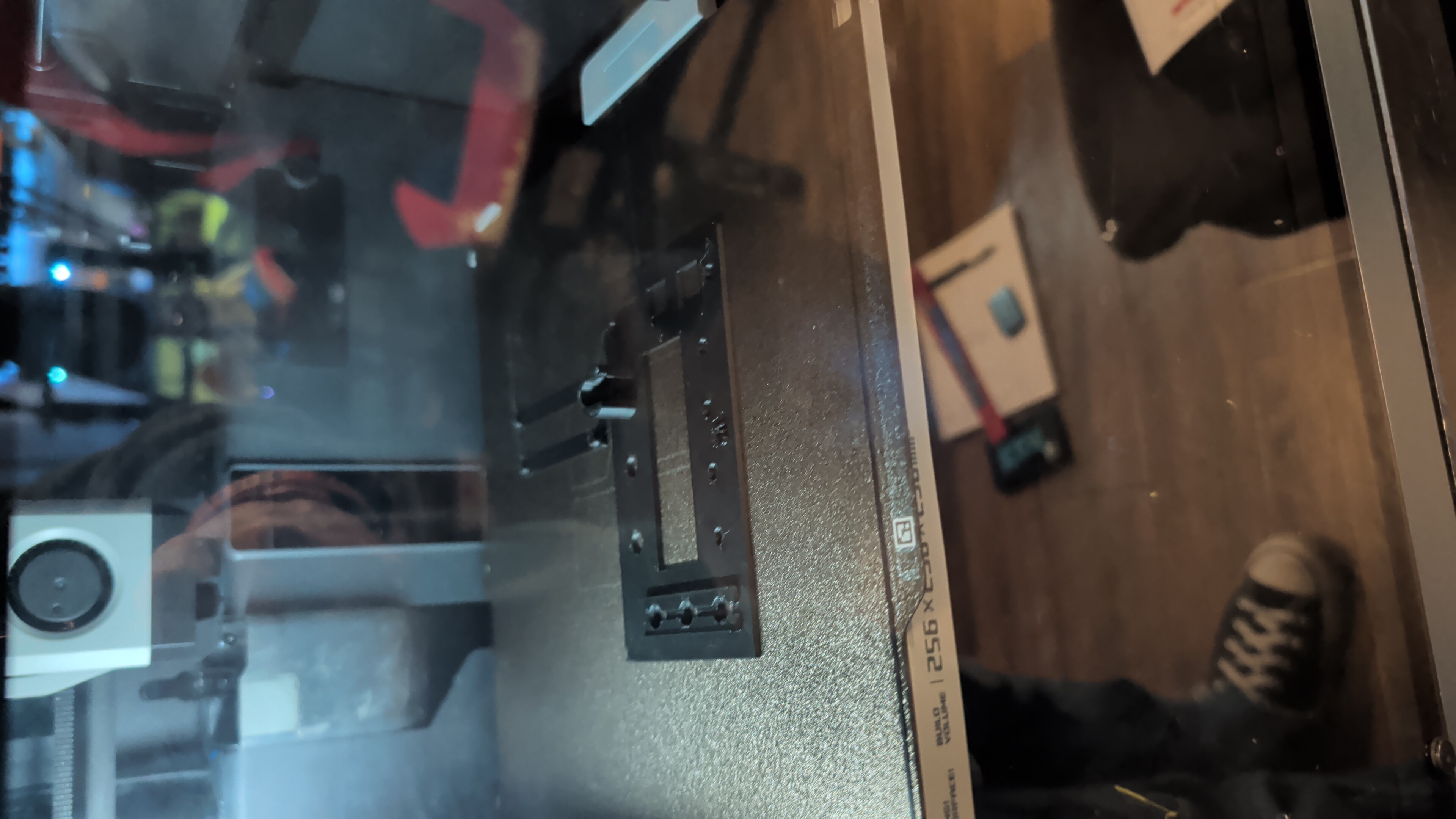
Mechanical Design
- Modeled a custom CAD enclosure inspired by 1960s vintage bench instruments.
- Designed a folding hinge mechanism to create an adjustable display angle and dynamic form factor.
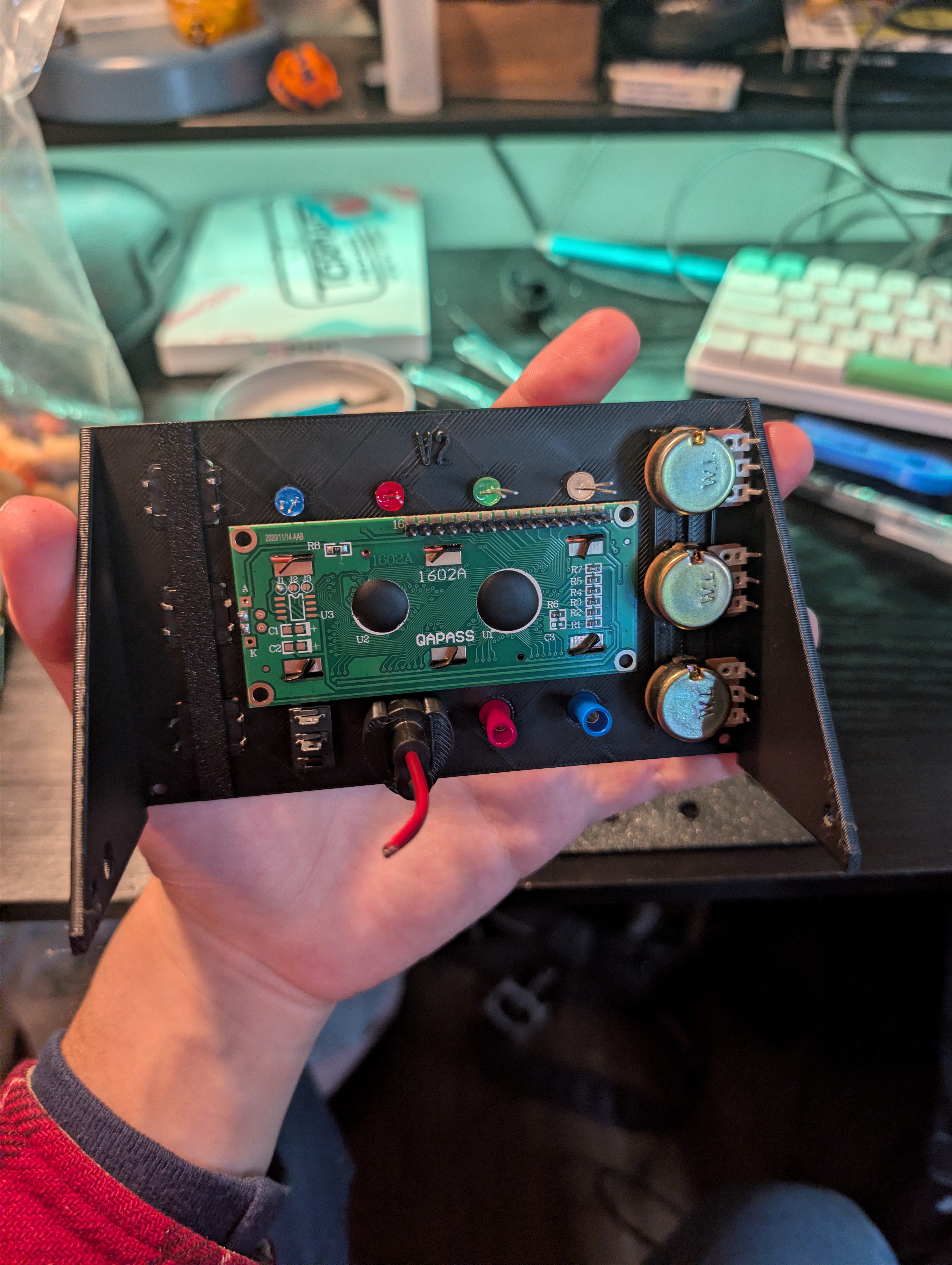
- Resolved hinge clearances and internal packaging constraints in CAD to prevent mechanical interference.
Hardware and Prototyping
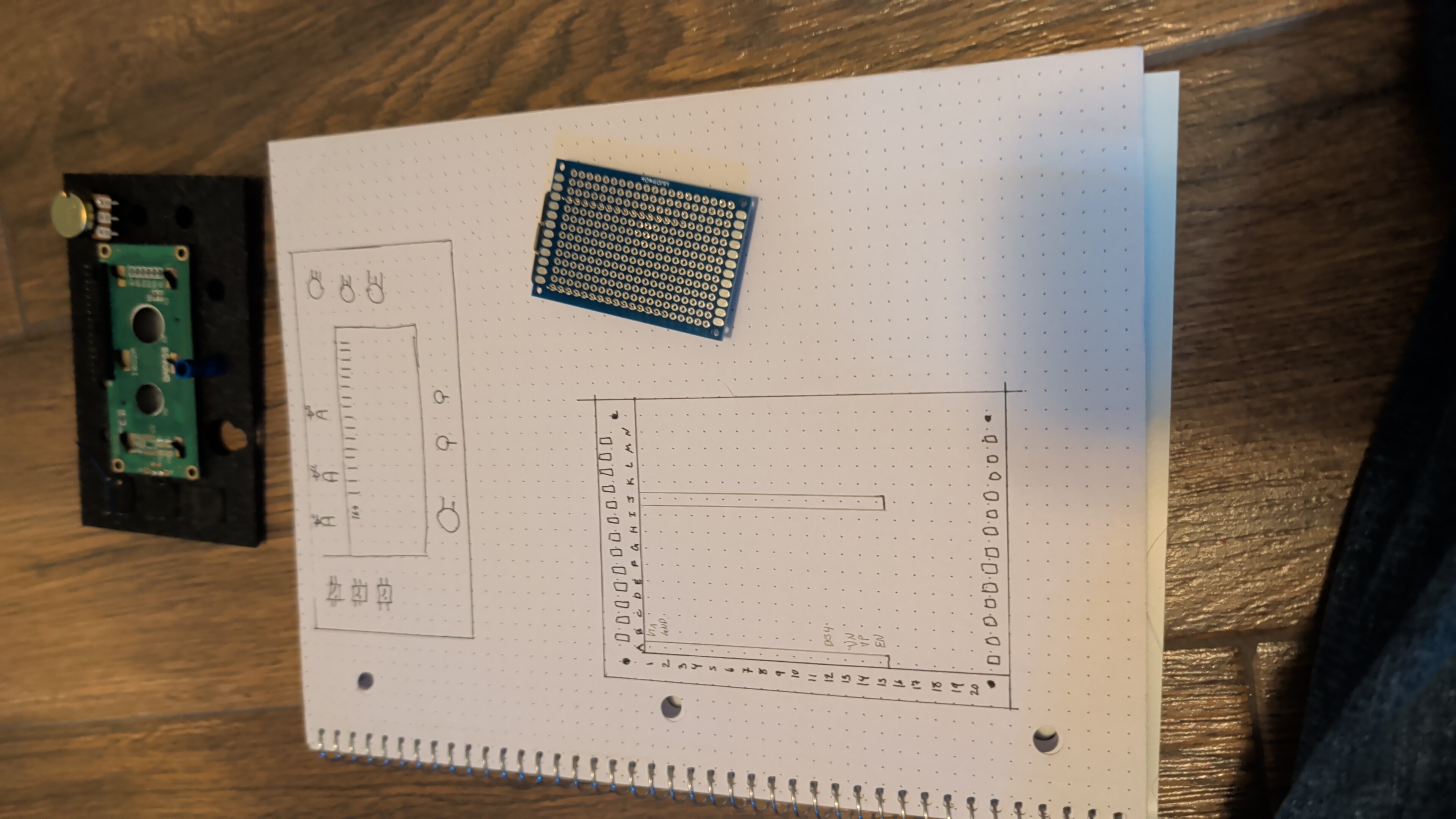
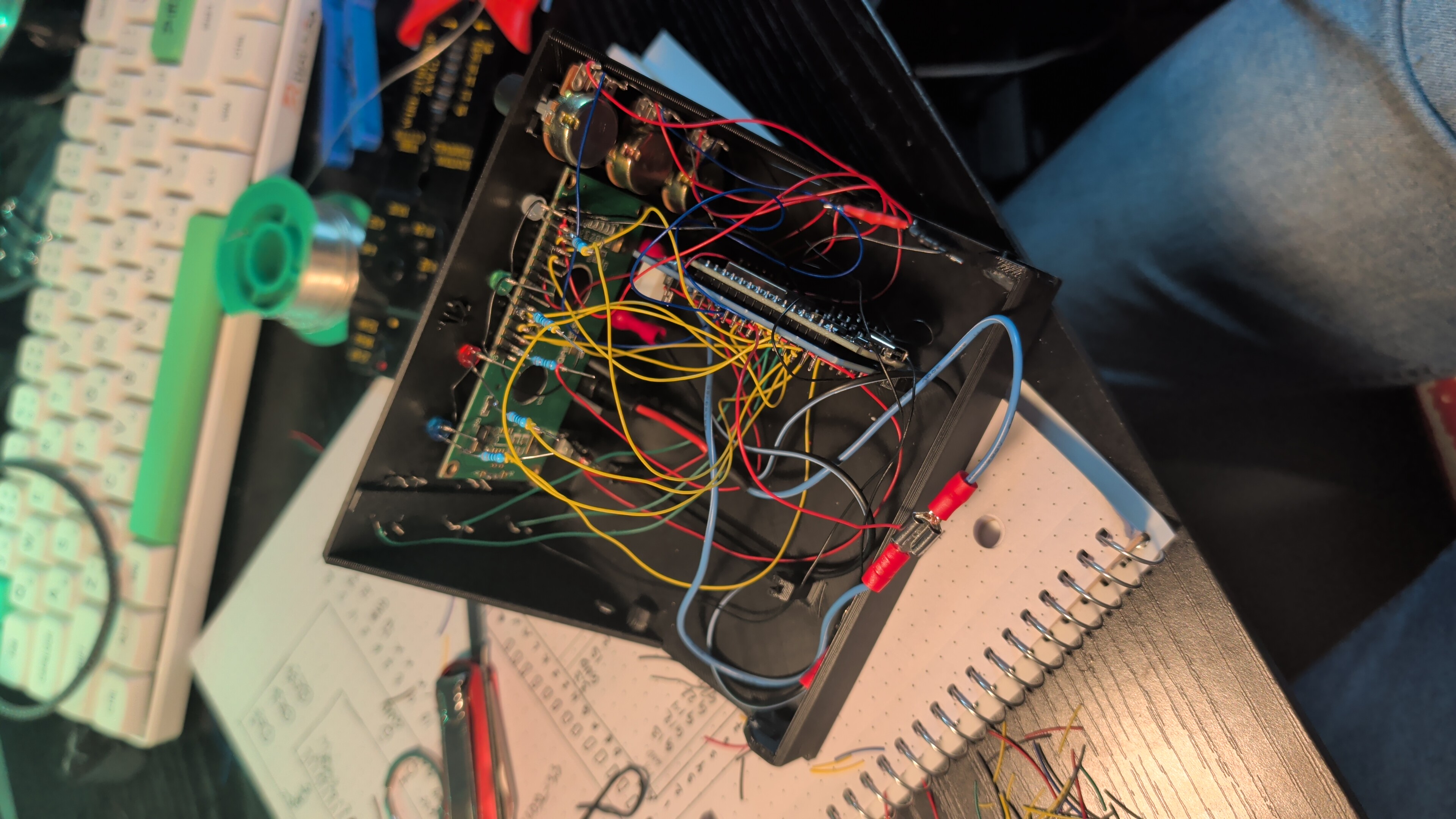
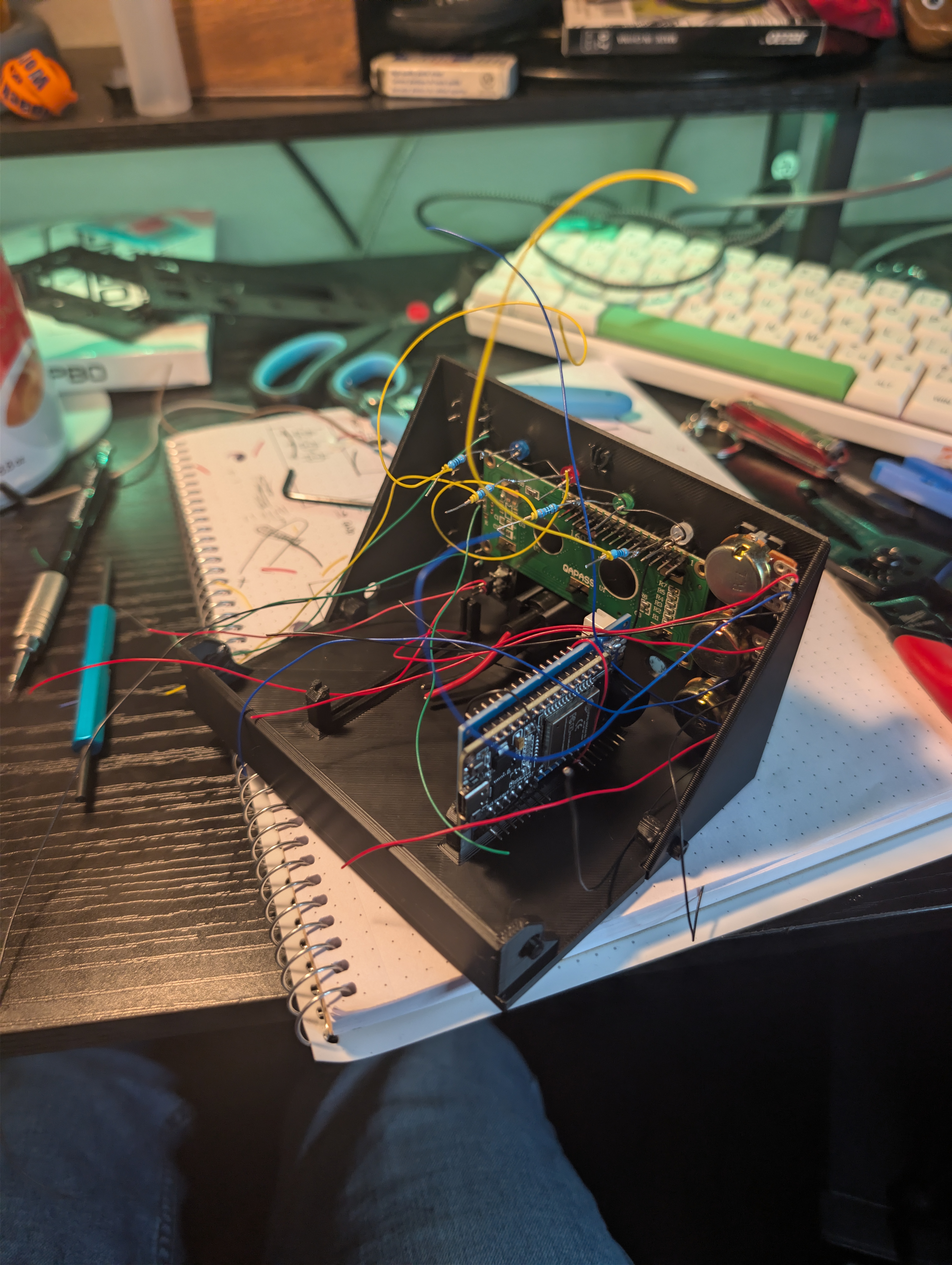
- Built internal wiring using traditional wire-wrapping with 24 AWG solid-core wire.
- Used wire-wrap intentionally for faster rework and to practice historical prototyping techniques.
- Added dual bullet-connector outputs for flexible probing with alligator clips or multimeter leads.
Firmware and Signal Generation
- Implemented custom ESP32 firmware for sine, square, and triangle waveform synthesis.
- Used the onboard 8-bit DAC with 256 quantization steps for analog output.
- Achieved stable frequency control and smooth enough output quality for bench debugging tasks.
Technical Impact
The project validated that low-cost microcontroller-based waveform generation can be practical for everyday test workflows while also serving as a strong platform for refining embedded firmware, enclosure mechanics, and rapid hardware iteration skills.
More Photos