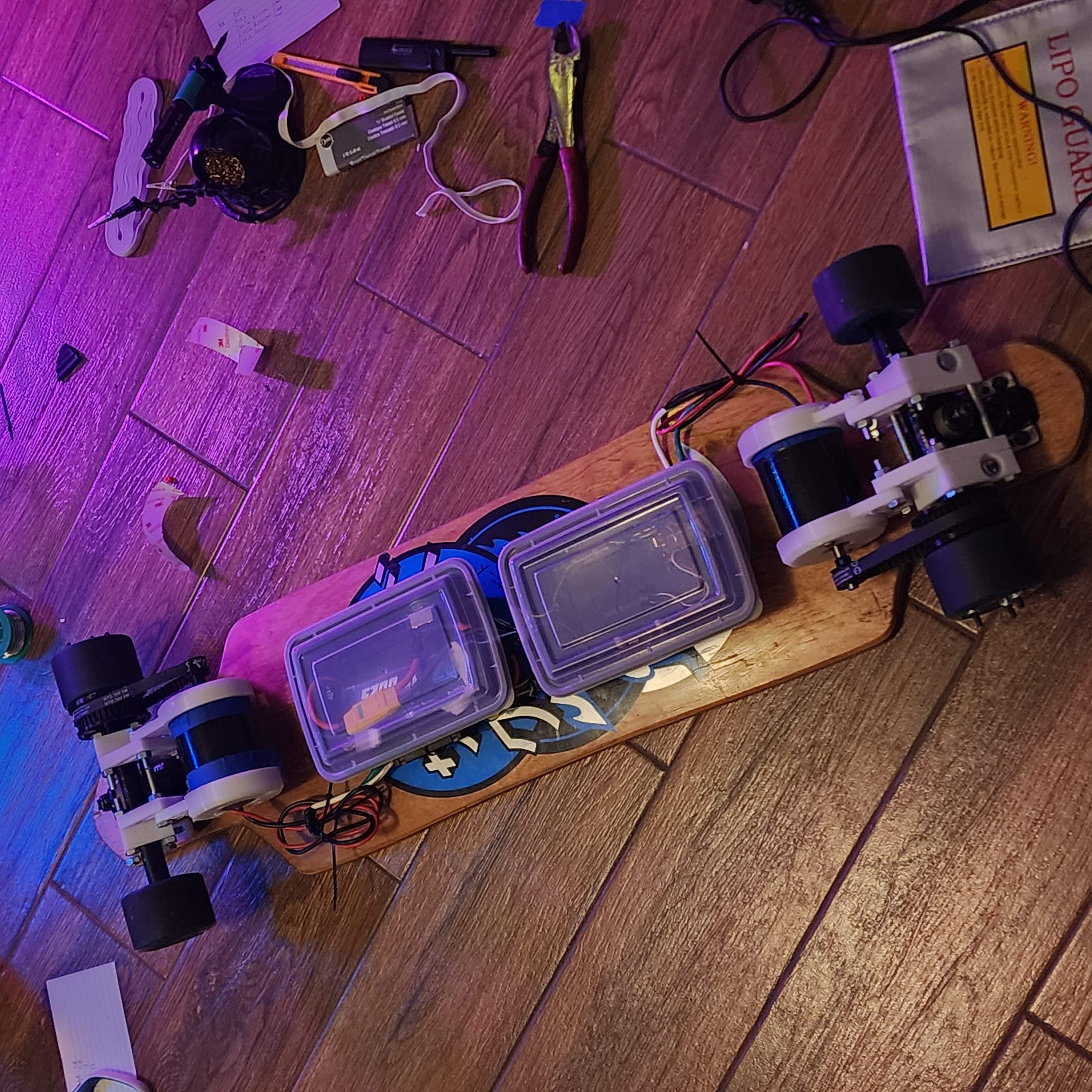
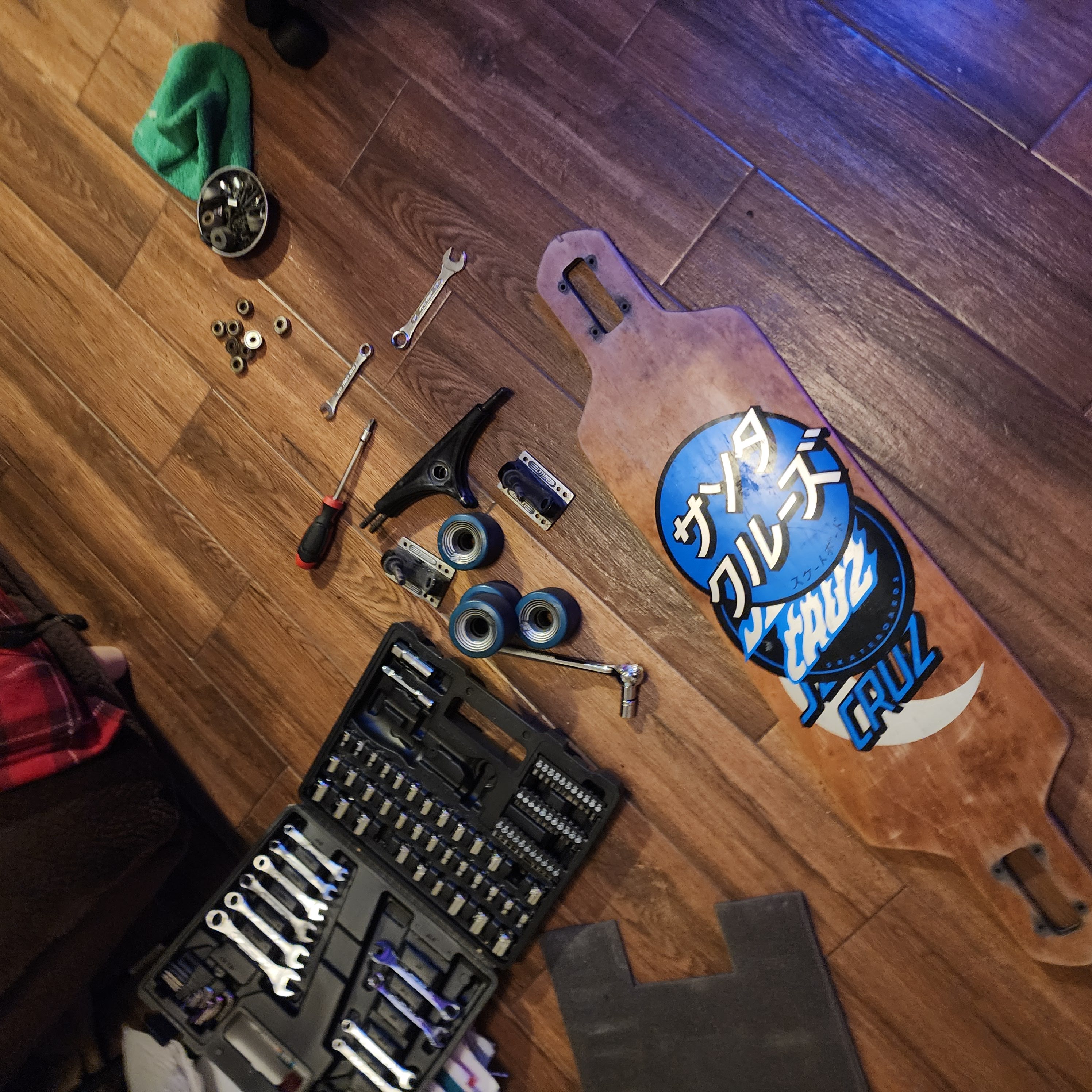
While living in Joe West at SJSU, I ended up in an engineering floor challenge with about two weeks to build something. Since I already skated around campus, I chose to design and build a custom electric skateboard from my existing Santa Cruz deck.
Project Photo
Design and Mechanical Layout
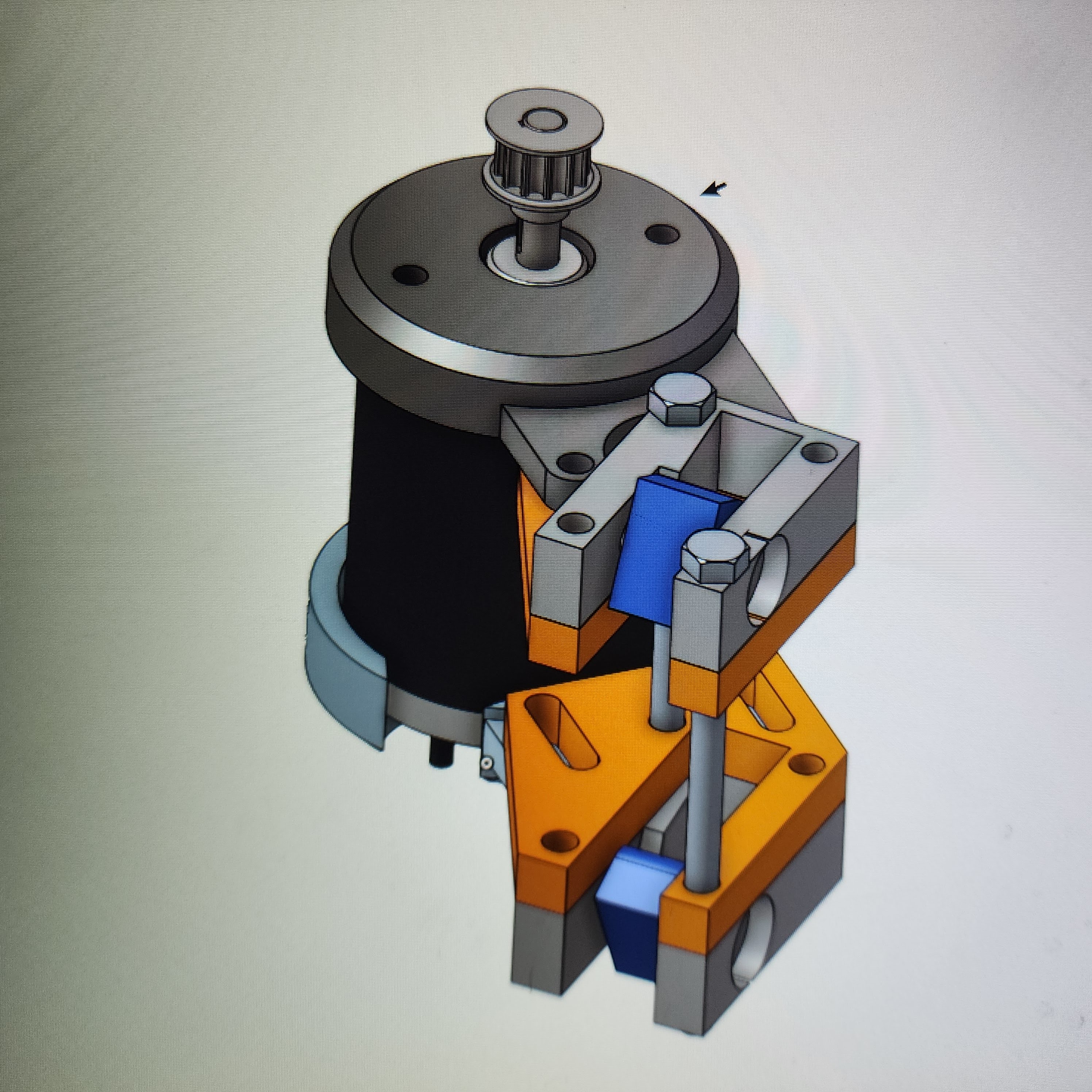
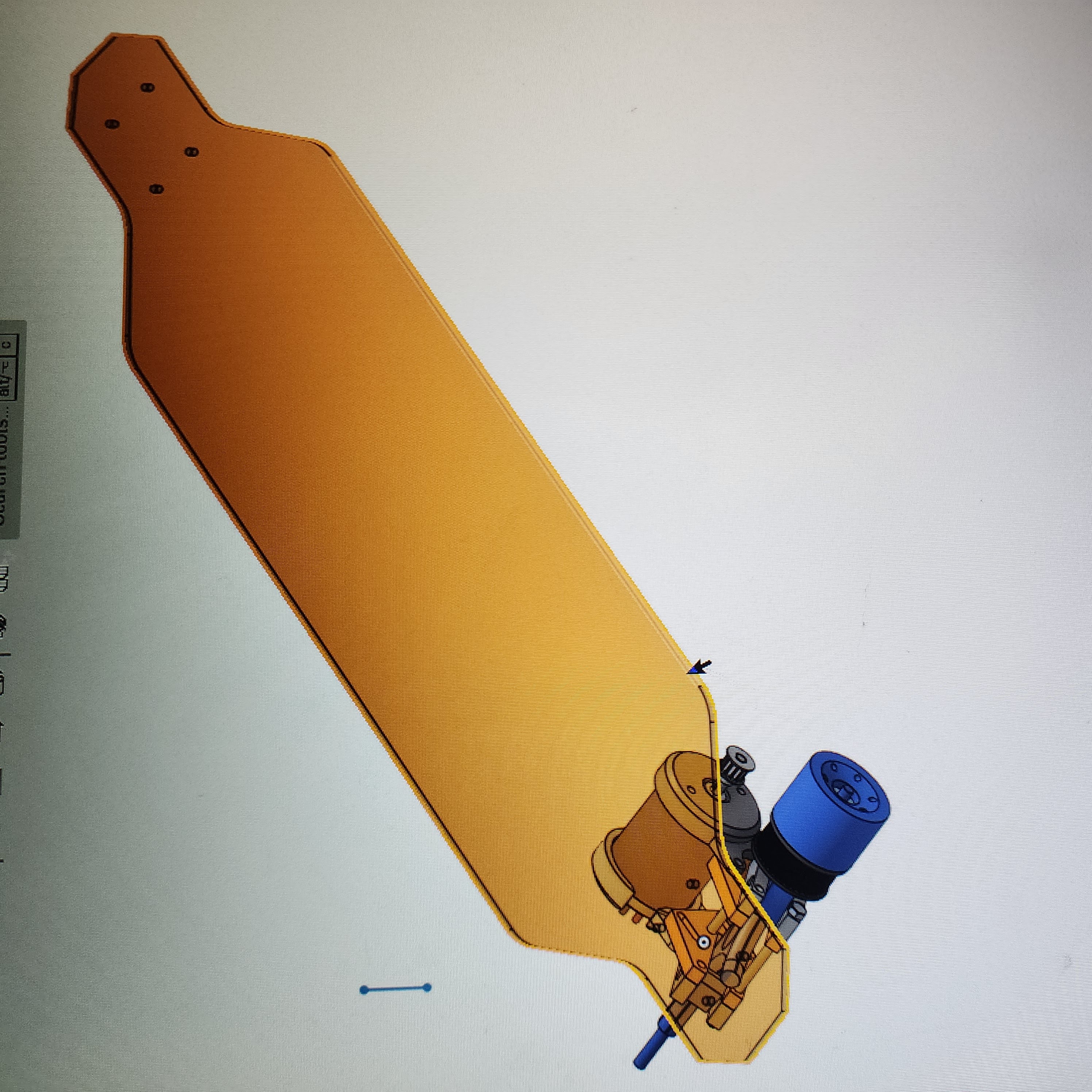
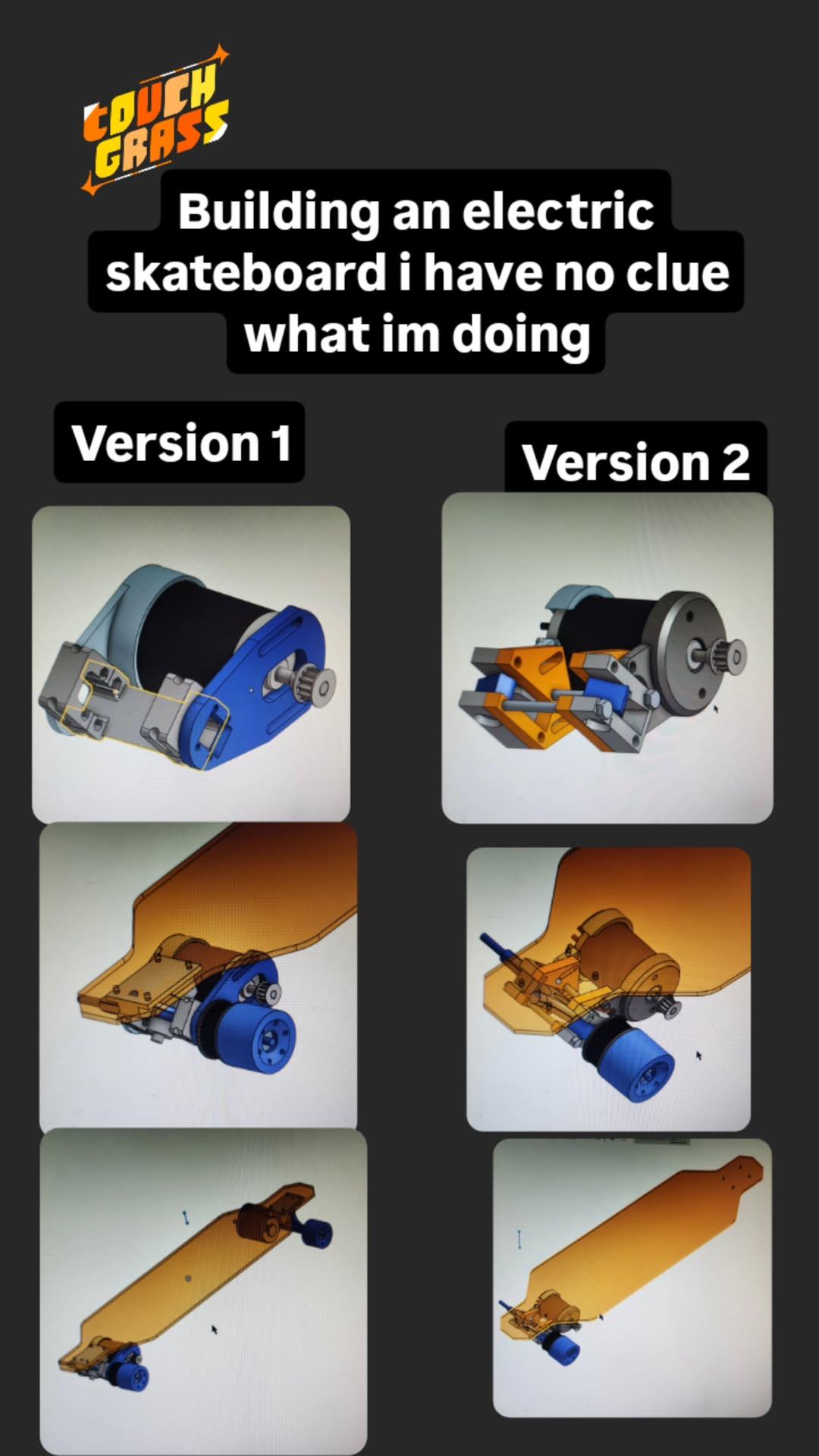
I measured the board and modeled the system in Onshape, then reused parts from my old robotics team, including two CIM motors and Talon SRX controllers. The hardest part was mount architecture: skateboard trucks move independently, so the motors needed floating truck-mounted brackets rather than rigid deck mounts.
Drive and Control System
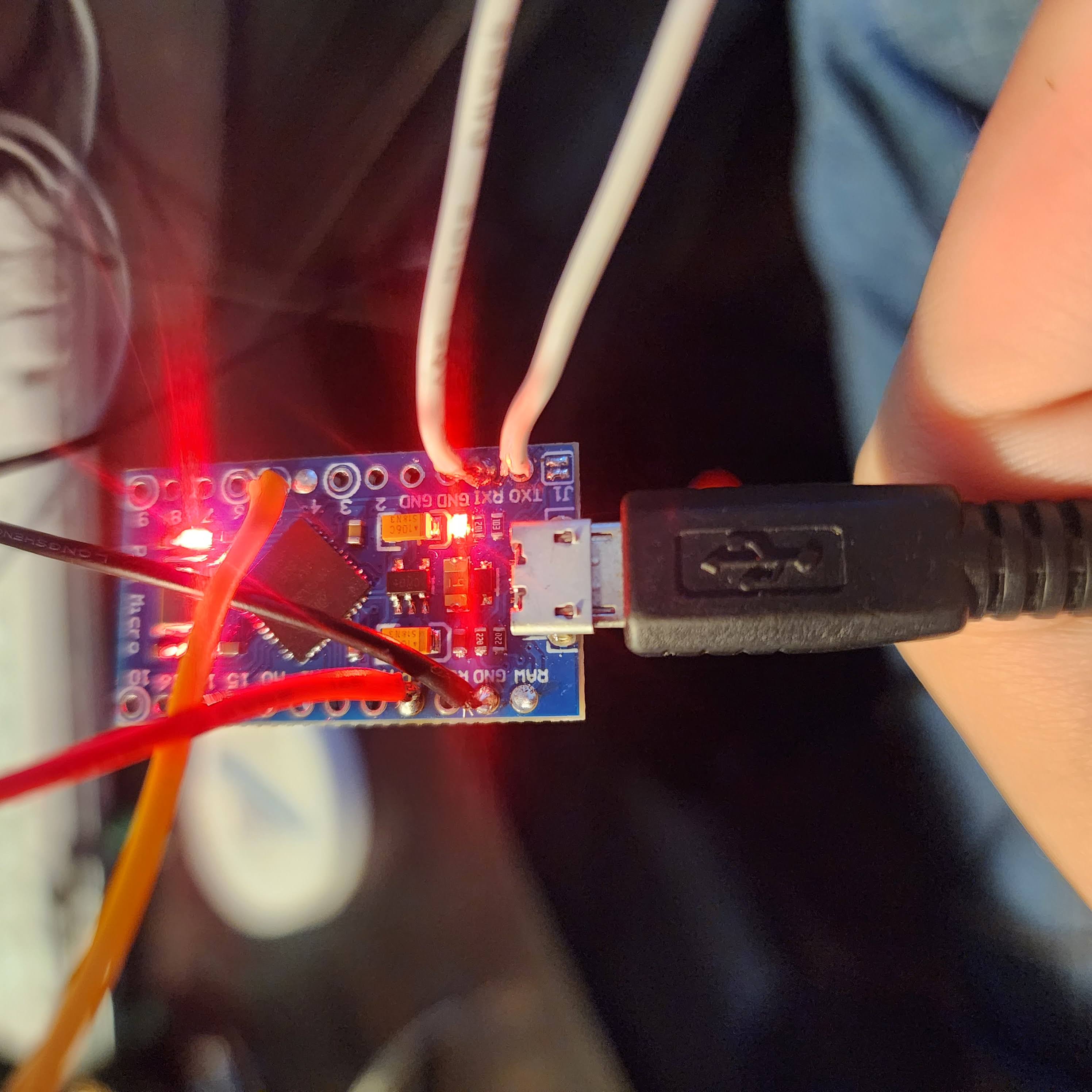
I powered front-right and rear-left wheels, effectively one motor per truck. Power came from a LiPo battery, and control used two ESP32 boards over BLE with a simple handheld throttle joystick and power switch interface.
Fabrication Iterations
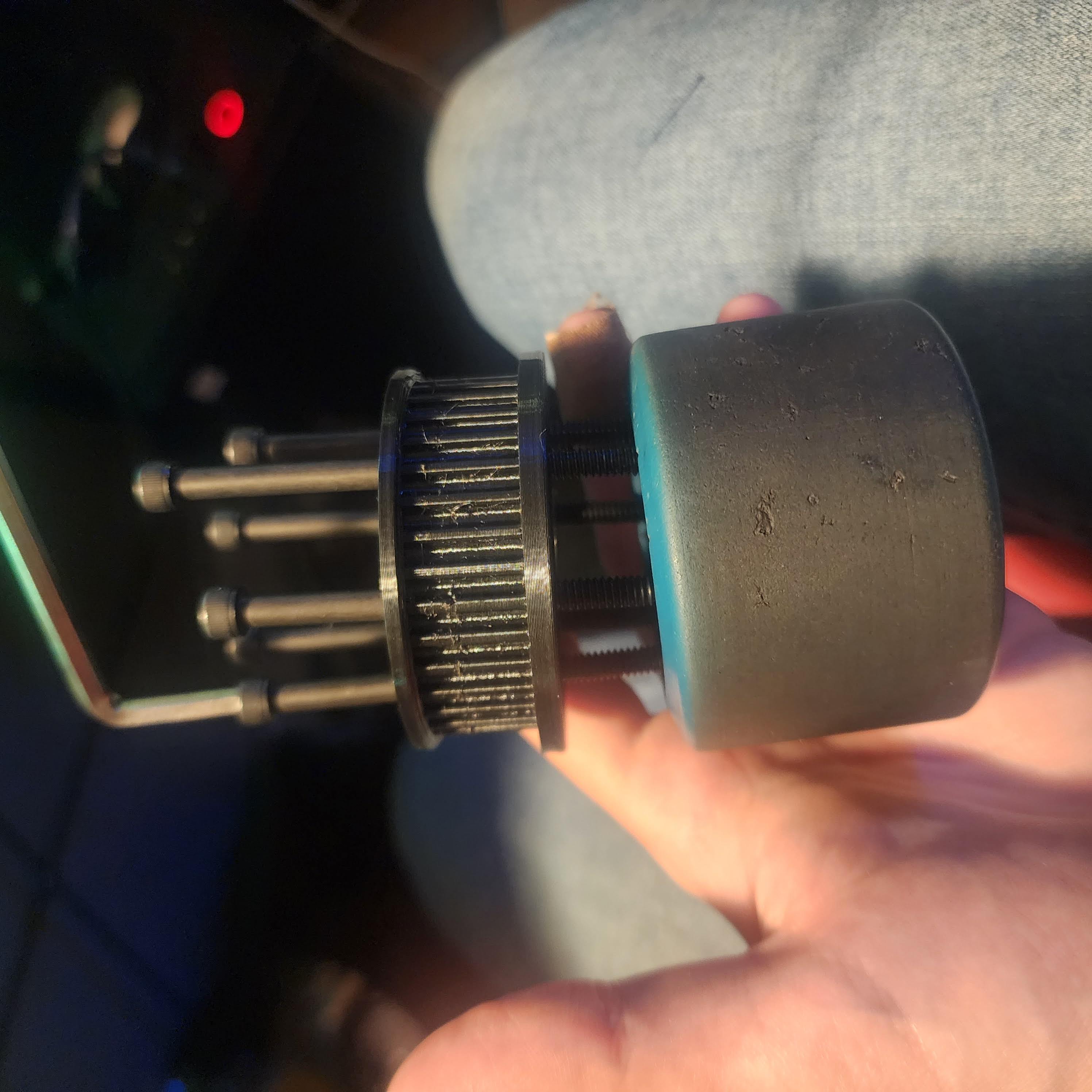
The first motor mount version was too thin and failed quickly, so I redesigned with thicker geometry and improved load paths. Electronics were housed in repurposed food containers, and wheel drive used belt transmission to a drilled sprocket mount.
Failure Modes and Lessons
The board worked, but prototype limitations showed up fast: imperfect motor alignment and PLA mounts printed on my Ender 3 could not handle sustained torque, leading to belt/sprocket stripping after only a few minutes. That failure highlighted the importance of alignment tolerances, material choice, and realistic project scope under deadline pressure.
Outcome
Even with durability issues, the build delivered exactly what I needed as a learning platform, and it ended up taking first place in the floor competition.
More Photos