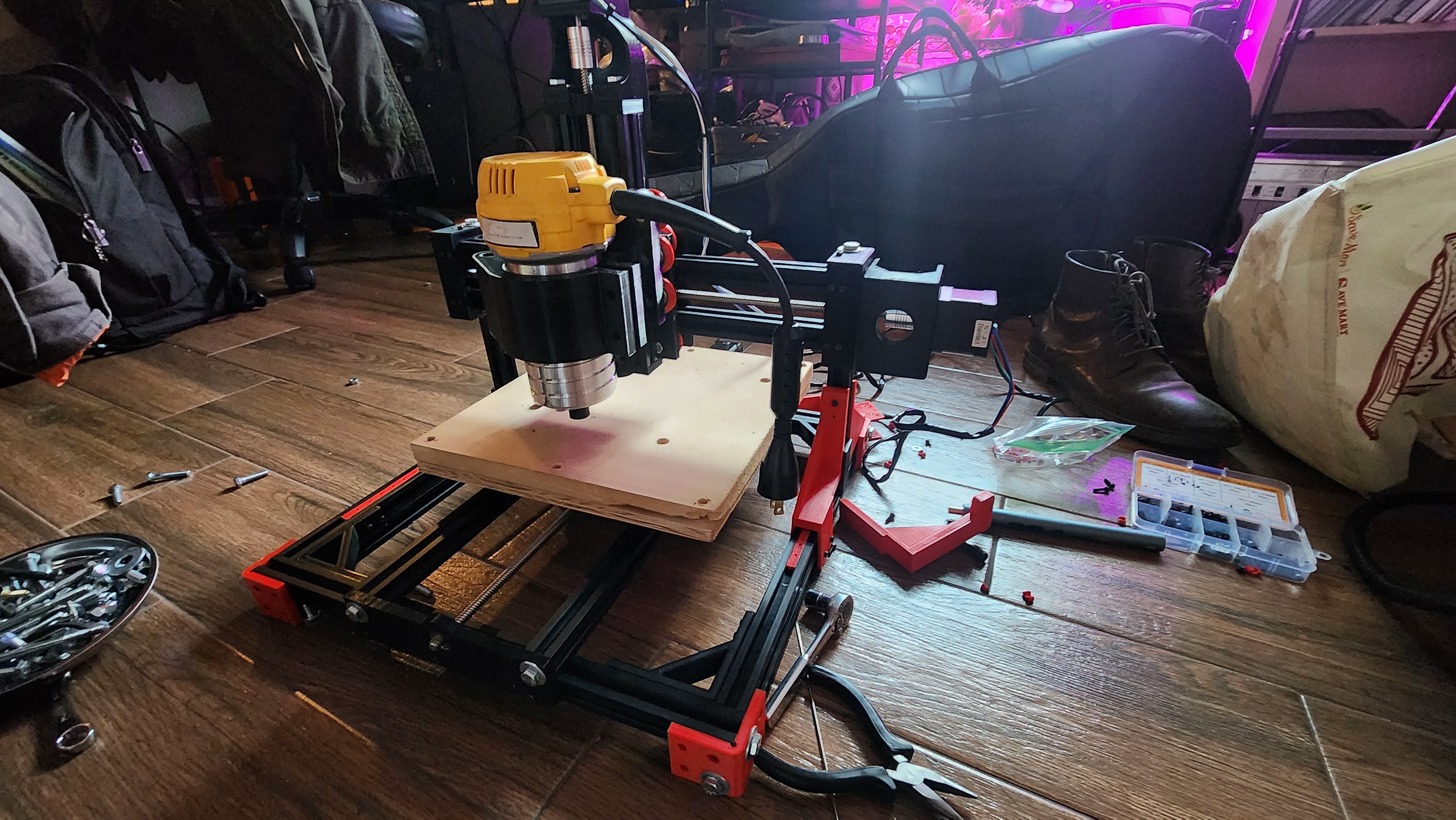
For my high school senior capstone, I built a tabletop CNC machine from scratch on about a $200 budget. The project became a real lesson in budget engineering, motion system trade-offs, and the gap between functional and truly rigid machine design.
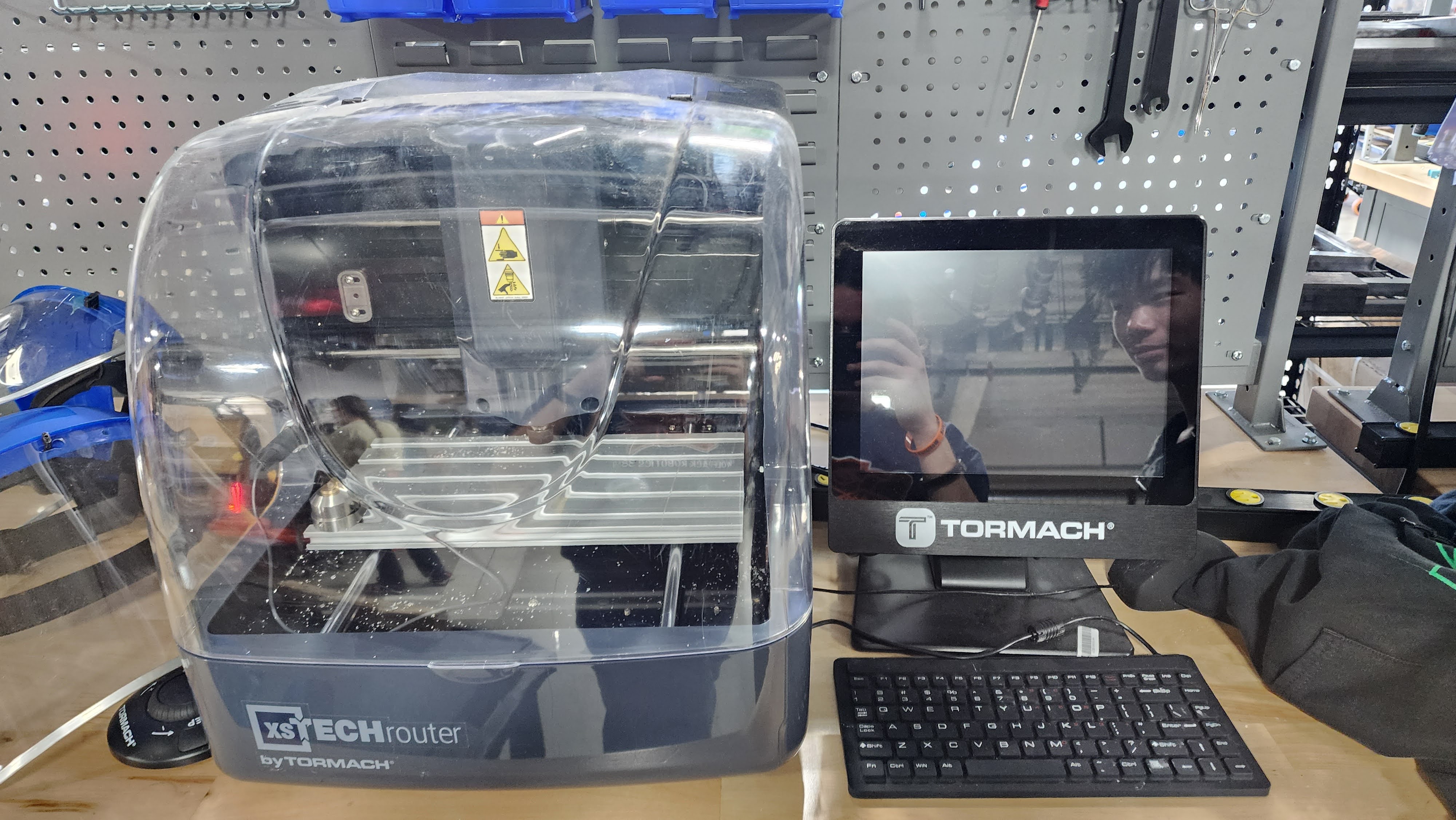
Project Photo
Design Direction on a Budget
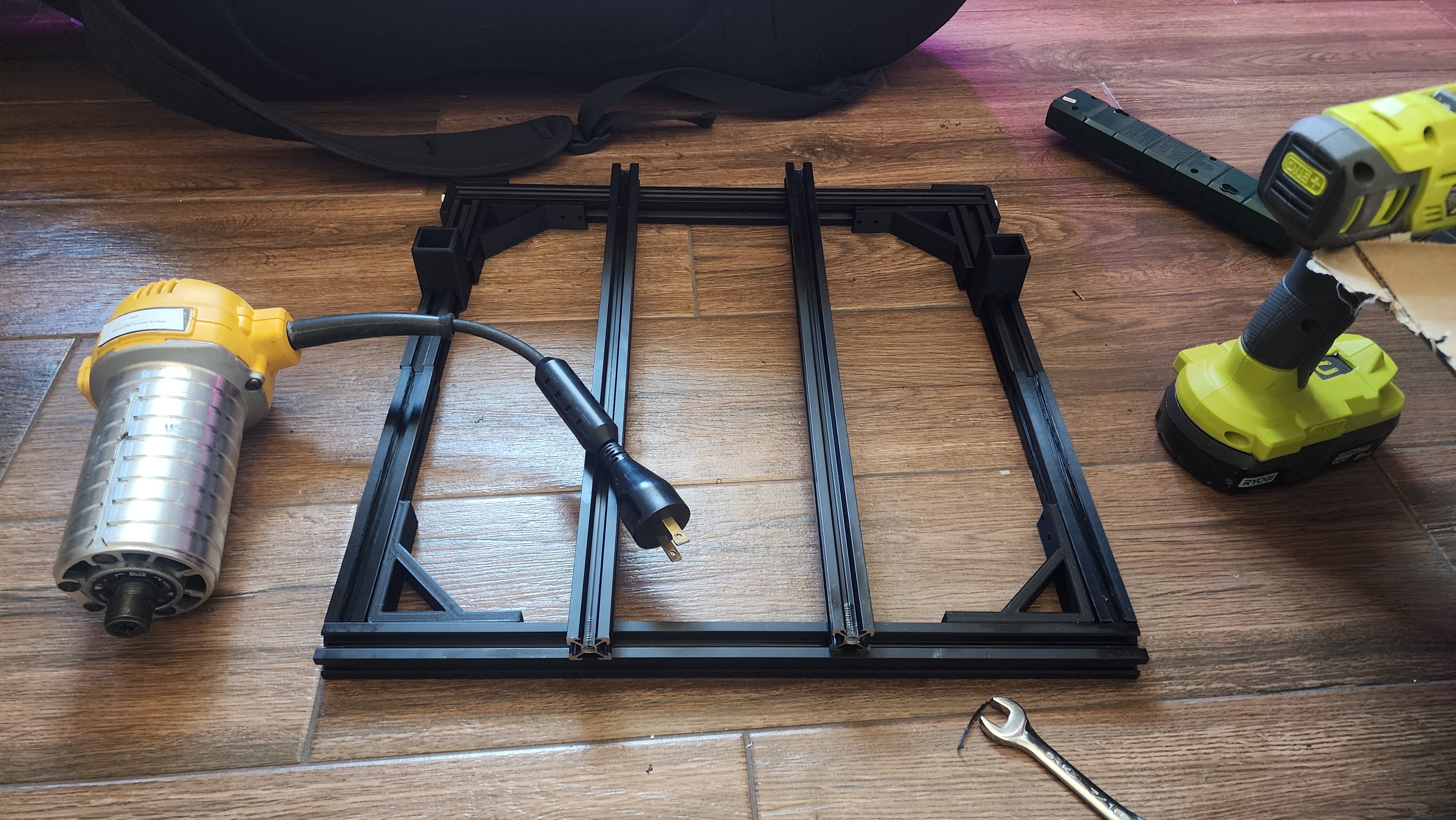
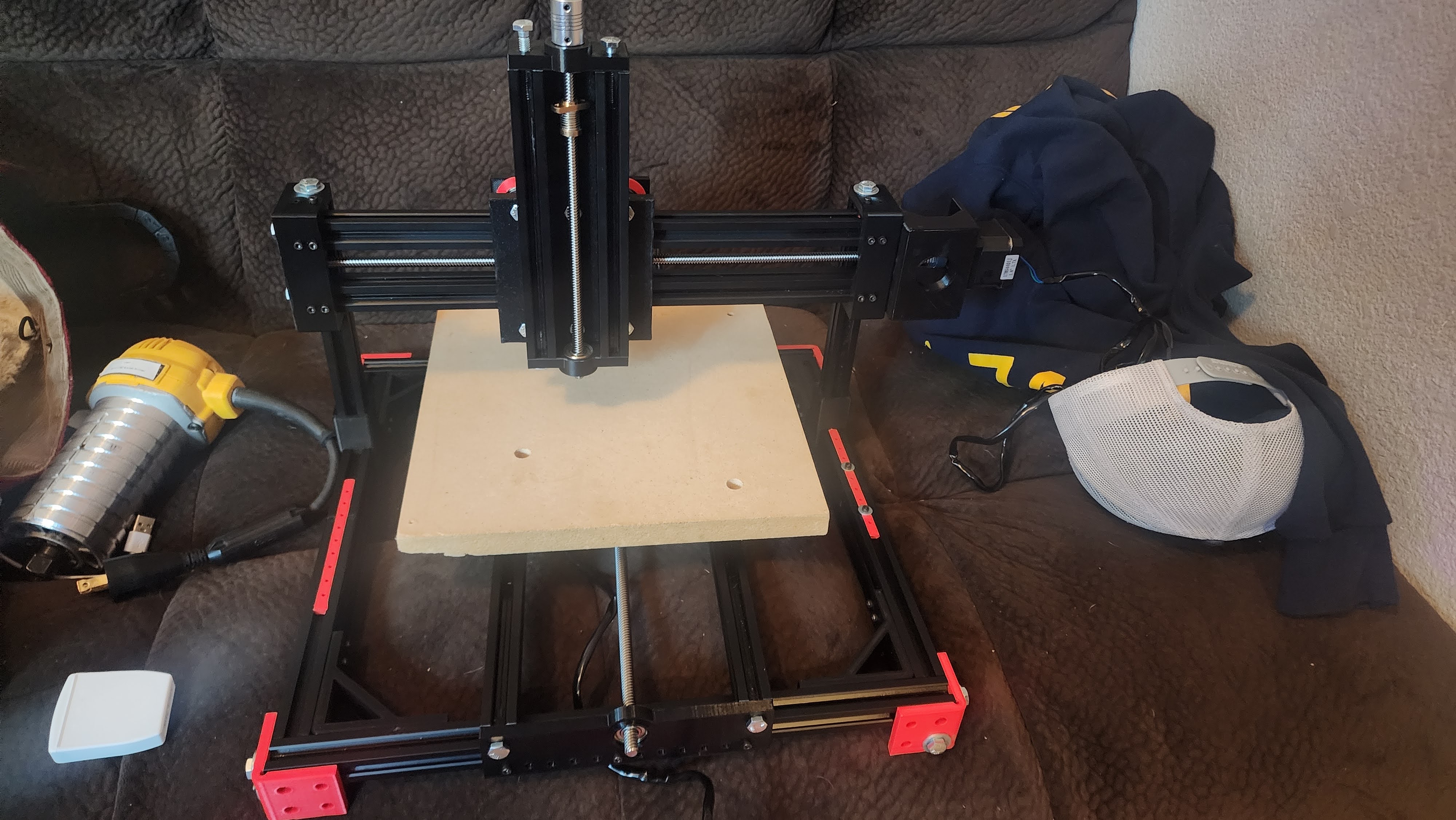
To minimize cost and part count, I used a bed-slinger architecture where the X-axis moved the work surface. This kept the design simpler and reduced the need for extra motors and more expensive mechanical assemblies.
Mechanical Trade-Offs
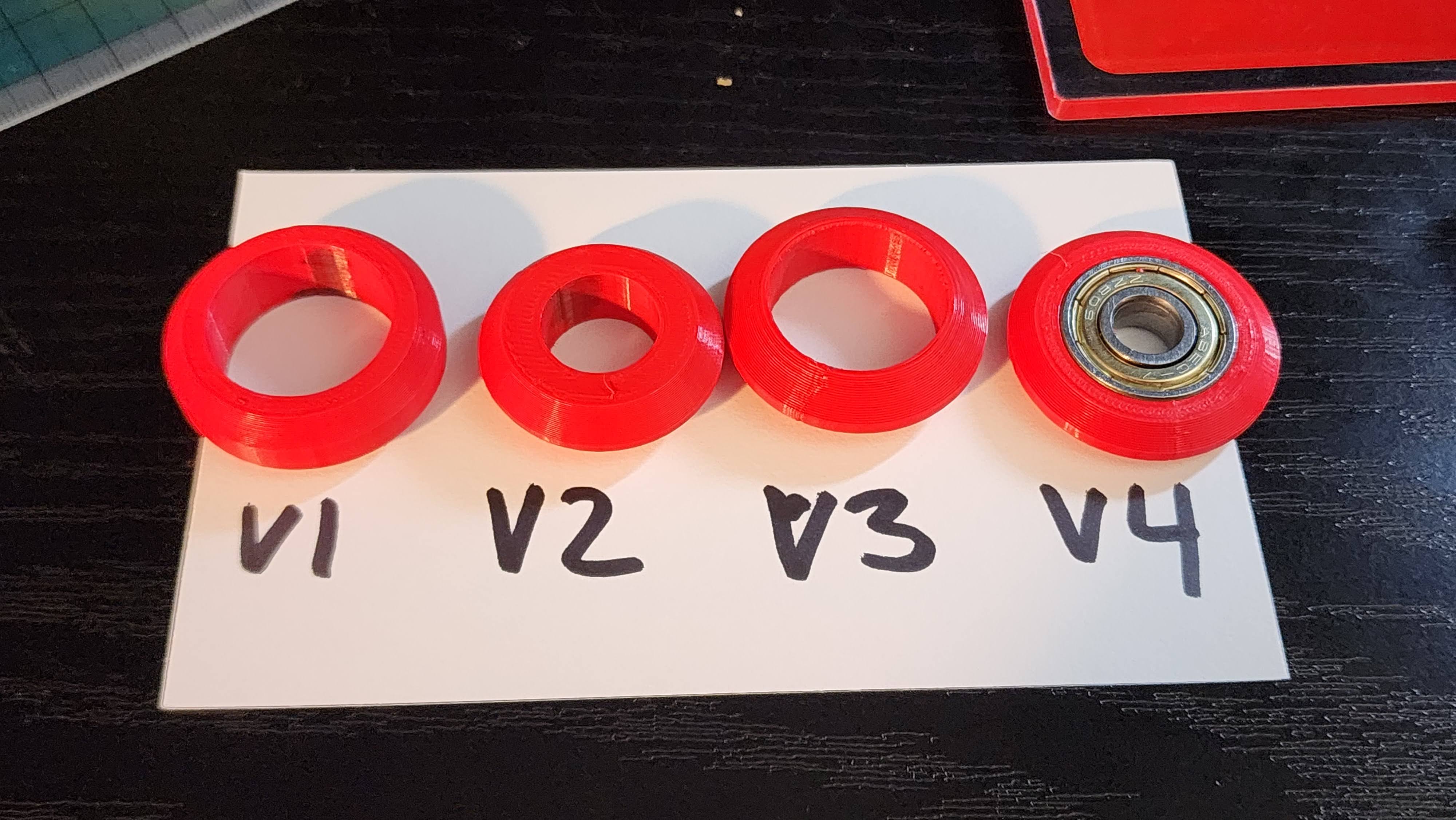
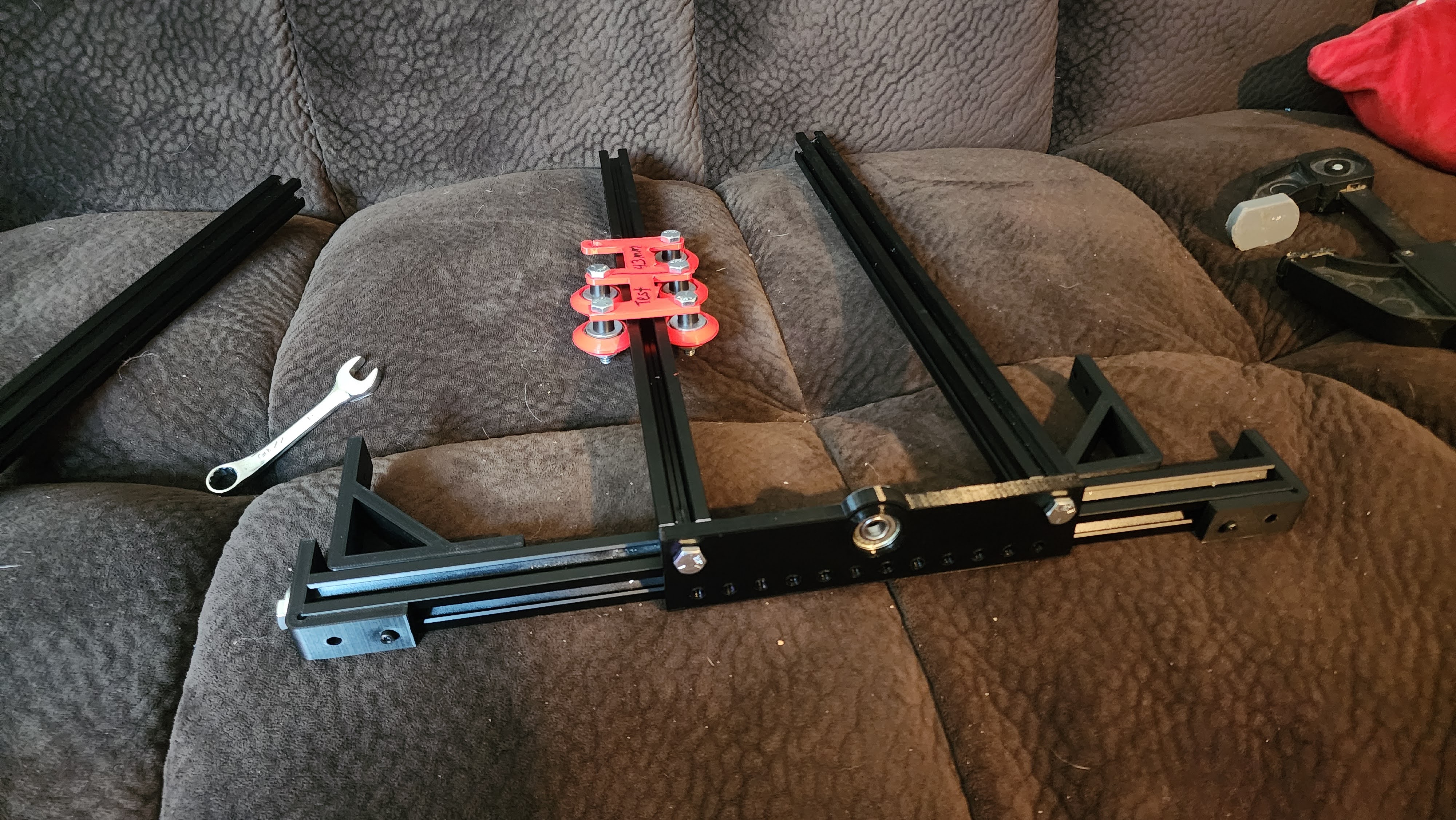
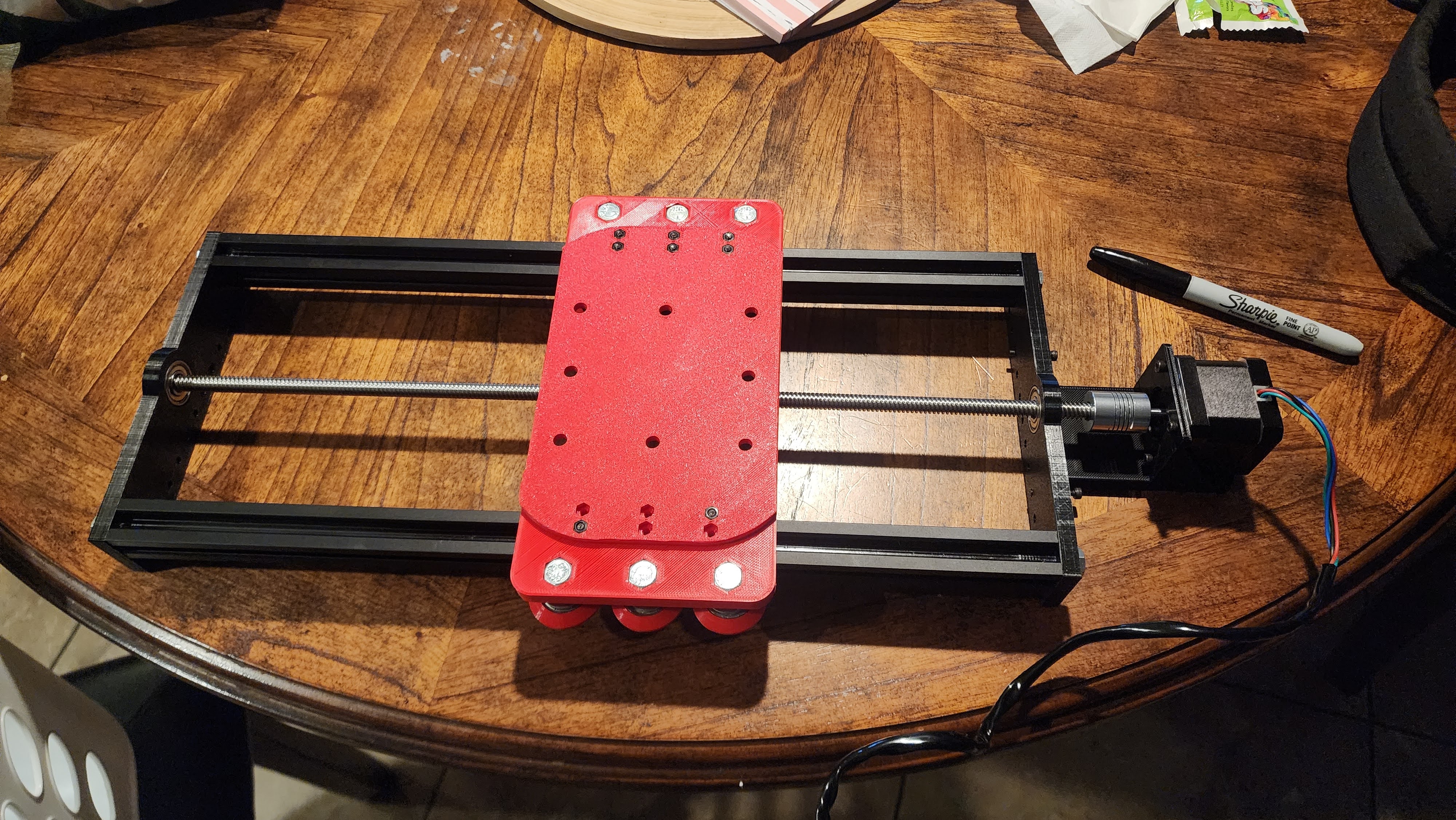
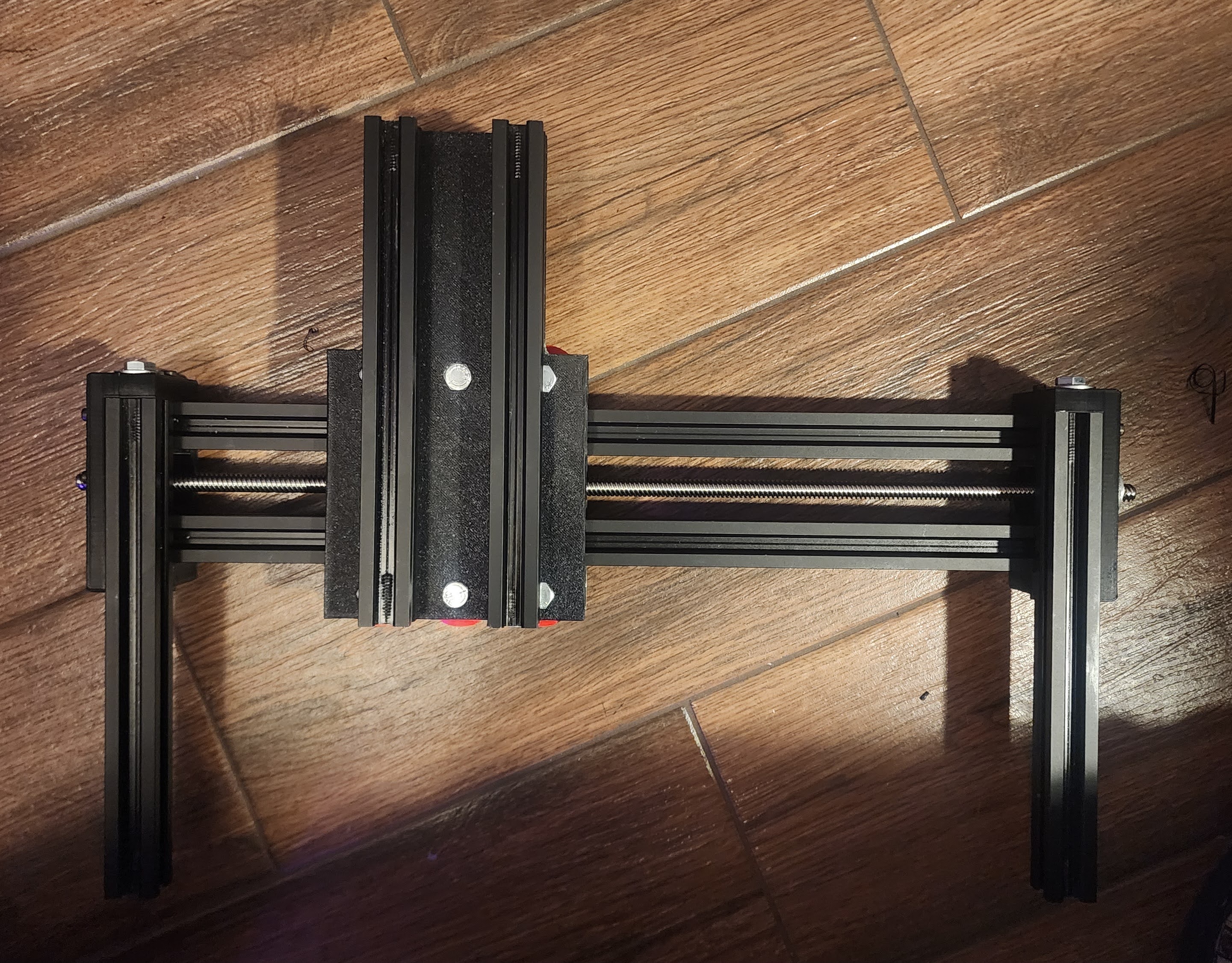
For linear motion, I used V-bearings on 2020 aluminum extrusion instead of rails or rods. While affordable, the tolerances on the budget wheels were inconsistent and caused alignment and rigidity issues throughout the build.
Frame and Hardware Choices
I used 3D-printed brackets to tie the frame together. They worked well enough to get motion, but in hindsight aluminum brackets would have made the structure significantly stiffer and more repeatable under load.
Electronics and Control Stack
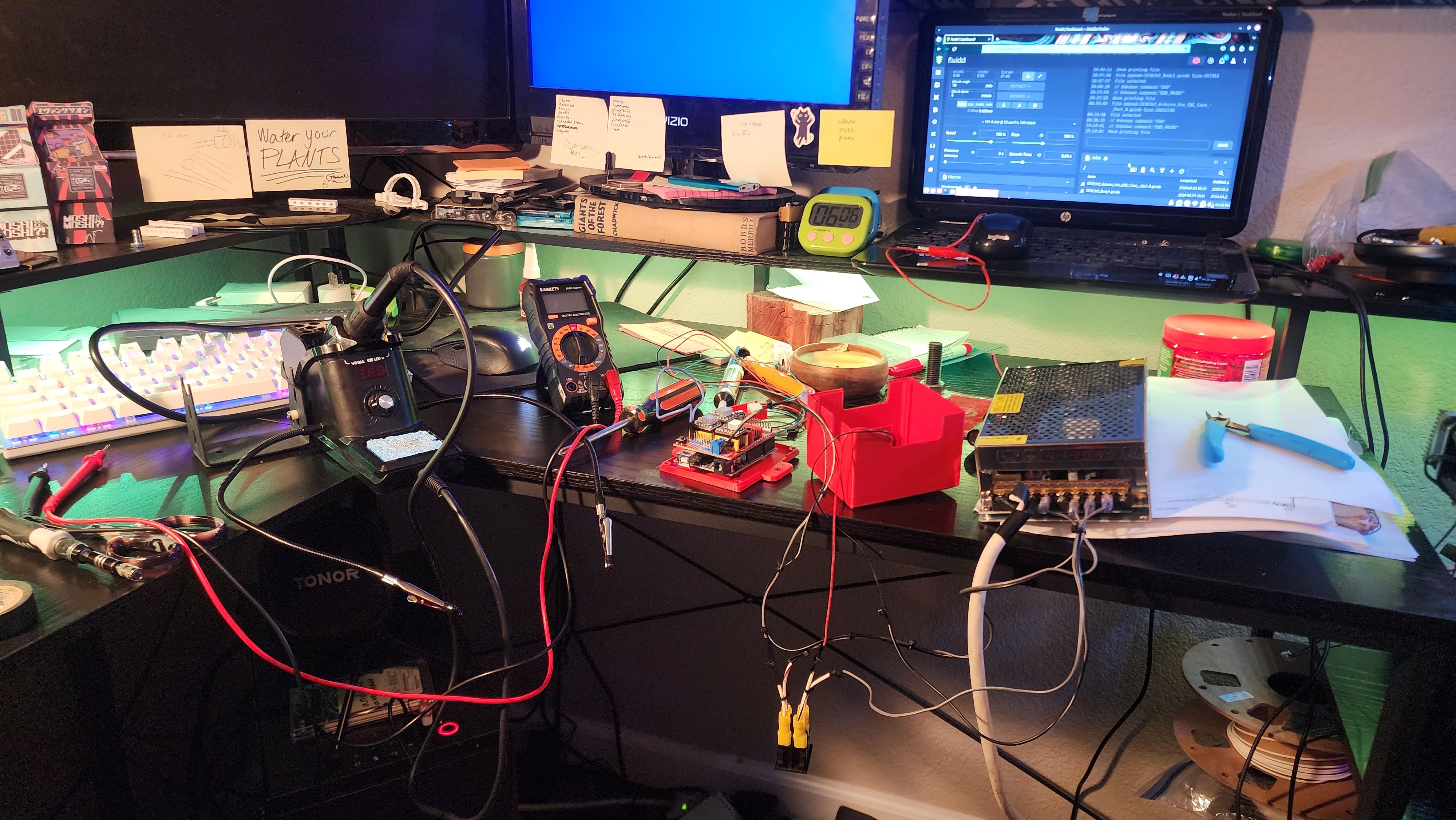
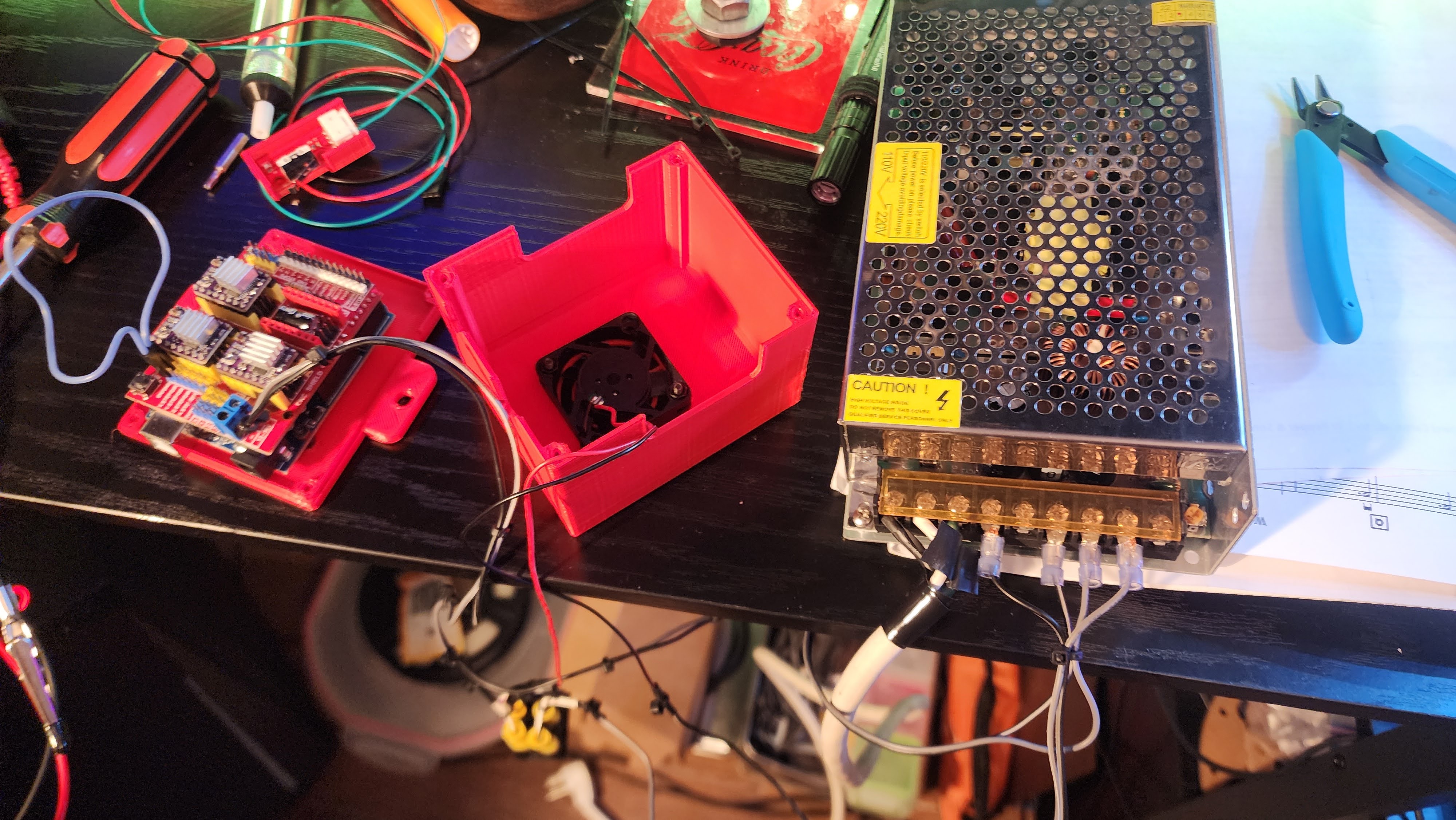
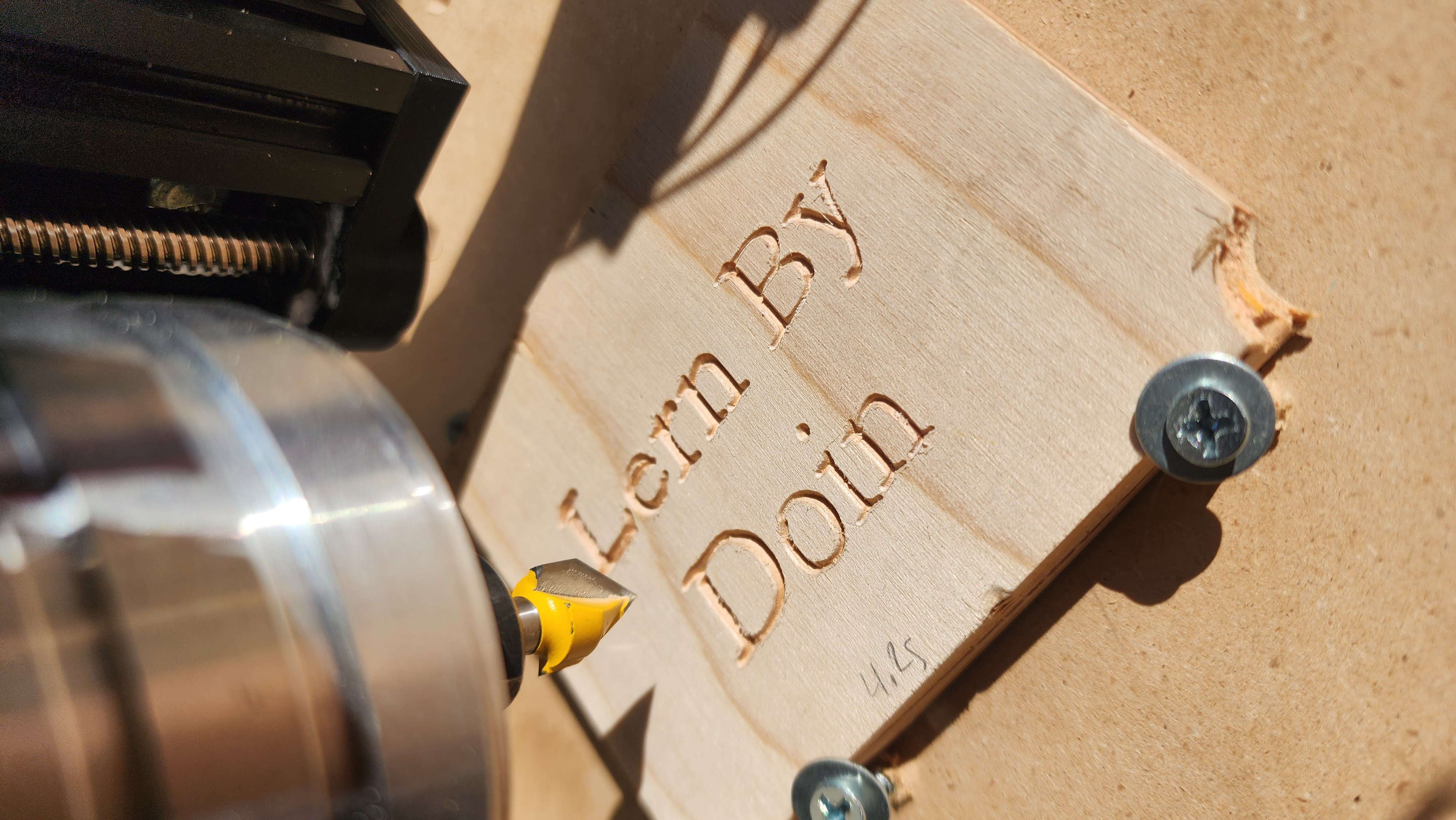
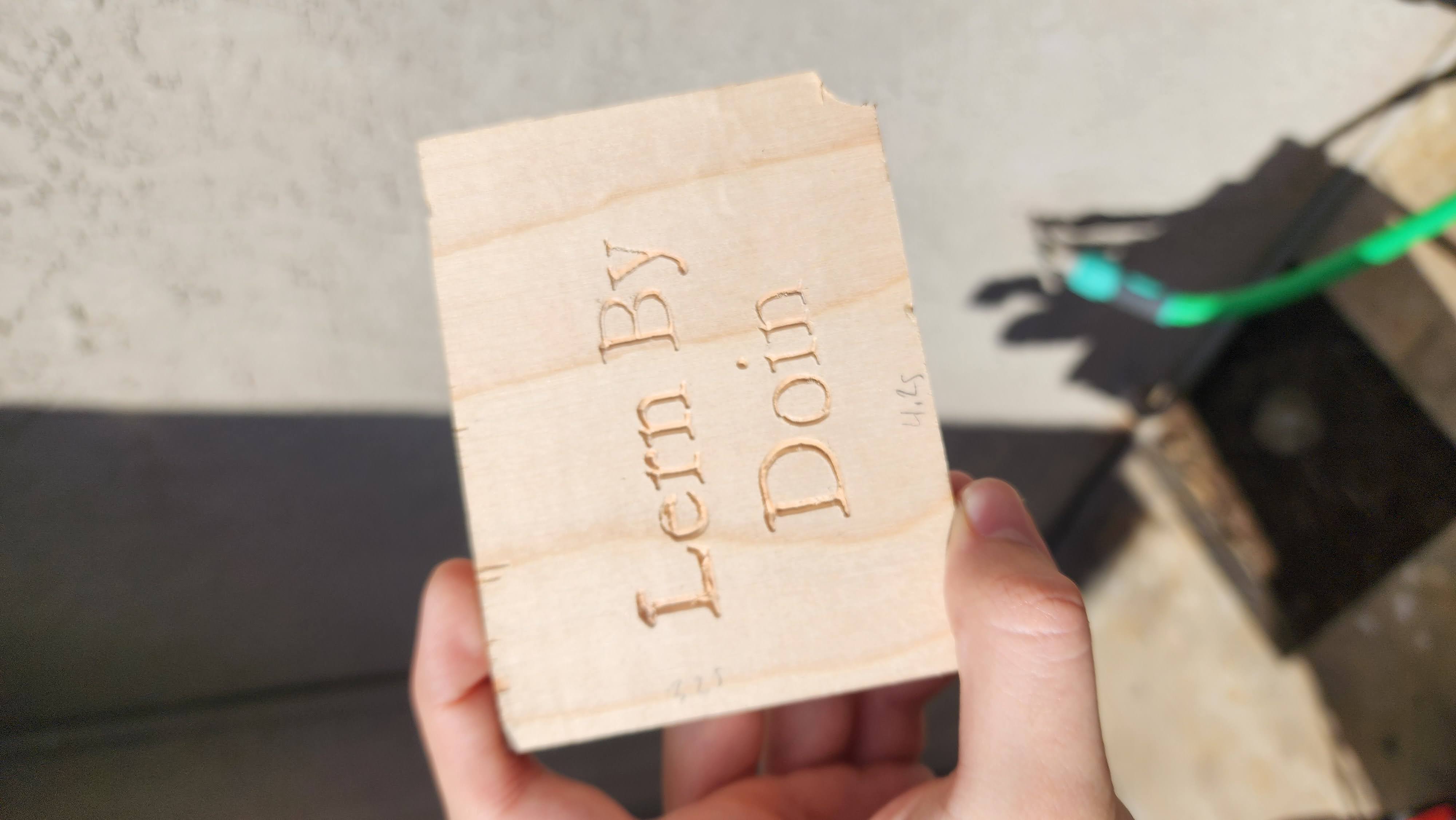
The control system used an Arduino running GRBL with a CNC stepper shield and three stepper drivers for X, Y, and Z. I sent jobs through Universal Gcode Sender. Watching the machine run and successfully cut early designs was a huge milestone.
Outcome and Lessons Learned
The final machine was functional but mechanically limited by rigidity trade-offs. Even so, it was an excellent introduction to CNC mechanics and taught me how to balance budget constraints against precision requirements in real hardware builds.
More Photos